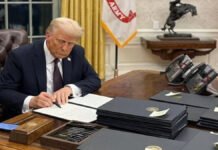
Washington, DC , : The U.S. President Donald Trump has issued a sharp warning to U.S. states, stating that he would withhold federal broadband funding from those implementing artificial intelligence regulations he believes threaten America’s global technological dominance.
Speaking on emerging technology policy, Trump singled out state-level AI laws—such as California’s regulations requiring AI developers to assess and mitigate catastrophic risks—arguing that such measures could slow innovation and undermine U.S. leadership in the global AI race. California Governor Gavin Newsom’s administration has defended the law as a necessary safeguard against unchecked AI development.
Trump’s comments follow a series of executive actions and policy proposals on artificial intelligence, reinforcing his position that AI development should be driven by rapid innovation rather than restrictive regulation. The threat has intensified federal–state tensions, particularly as states seek to establish their own guardrails for emerging technologies.
Policy experts warn that linking federal infrastructure funding, such as broadband expansion, to AI regulation compliance could trigger legal challenges and deepen partisan divides over technology governance.
⚖️ Growing Scrutiny of Big Tech AI Practices
In related developments, a bipartisan coalition of U.S. state attorneys general has issued formal warnings to major technology companies—including Microsoft, Meta, Google, and Apple—over concerns that AI systems producing “delusional” or misleading outputs could violate consumer protection and public safety laws.
The attorneys general cautioned that companies deploying generative AI tools must ensure accuracy, transparency, and safeguards, particularly when AI-generated content impacts healthcare, finance, elections, or public trust.
Together, the developments highlight a growing national debate over who should control AI policy—the federal government, individual states, or the private sector—as artificial intelligence becomes central to economic competitiveness, national security, and daily life.