Washington, D.C. | November 3, 2025
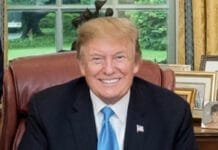
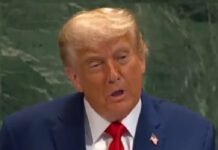
The U.S. President Donald Trump hinted at potential U.S. military involvement abroad, just days after returning from his Mar-a-Lago residence. Speaking at a closed-door event with conservative donors in Florida, Trump’s remarks suggested a “strategic readiness” posture—triggering alarm among political analysts and international observers.
“The world must know America is not asleep anymore,” Trump declared. “Our enemies are watching, and they’ll soon see strength like never before.”
While no direct nation was mentioned, his tone and phrasing hinted at ongoing tensions in Eastern Europe, the Middle East, and the Indo-Pacific region.
⚠️ Renewed Focus on Nuclear Testing Components
According to defense sources quoted by The Washington Post, Trump recently authorized the procurement of non-warhead nuclear testing components, marking the first such move since the early 2000s. Though not indicative of live nuclear testing, the order signals a renewed push for U.S. deterrence capability.
Pentagon insiders, speaking on condition of anonymity, said the initiative aims to “enhance simulation accuracy for future readiness,” though Democrats have raised concerns that it could destabilize decades of non-proliferation efforts.
Senator Elizabeth Warren criticized the decision: “This is reckless. We should be de-escalating nuclear tensions, not flirting with a new arms race.”
🌍 Democrats Condemn, Republicans Applaud
Democratic leaders swiftly condemned Trump’s remarks and defense directives, warning that such rhetoric undermines diplomatic stability. Representative Alexandria Ocasio-Cortez posted on X (formerly Twitter):
“Ordering nuclear test components is not leadership—it’s provocation. The world deserves diplomacy, not chest-thumping.”
Republicans, however, defended the move as a necessary show of strength. Senator Tom Cotton called it “a reminder that peace comes through power,” echoing Reagan-era sentiments.
Political analysts suggest Trump’s renewed hawkish tone could be part of a 2026 electoral strategy aimed at rallying conservative voters around themes of national strength, defense revival, and “America First” security.
💣 Experts Warn of Escalation Risks
Defense experts warn that even symbolic nuclear readiness steps can trigger a reaction from rival powers like Russia or China.
Dr. Fiona Mathews, a senior fellow at the Council on Strategic Affairs, noted:
“This kind of rhetoric risks creating self-fulfilling cycles of escalation. When America signals testing—even without warheads—Moscow and Beijing interpret it as intent.”
The move comes amid ongoing geopolitical tensions, including China’s increased military maneuvers around Taiwan and Russia’s cyber operations in Europe.
🕊️ Biden Administration Response
The White House has not directly commented on Trump’s statements, but a National Security Council official confirmed that “no official testing program” has been approved under current U.S. policy.
Still, the symbolic impact of Trump’s remarks continues to ripple through international markets and diplomatic circles.
European Union spokesperson Marie Fournier urged restraint:
“Any indication of U.S. rearmament, even symbolic, risks triggering global instability. Dialogue must take precedence.”
🧭 Analysis: A Calculated Political Move?
Analysts view Trump’s latest statements as part of a calculated narrative to project strength while courting defense industry donors. With several former Pentagon advisors reportedly back in his inner circle, sources suggest a more aggressive posture toward adversarial nations could shape his campaign messaging.
Political strategist John Healy explained:
“Trump knows the base responds to shows of power. But this also signals a broader attempt to reshape America’s defense narrative ahead of a volatile election season.”
🧨 Global Reactions and the Path Ahead
International media outlets have framed Trump’s statements as a potential shift back toward Cold War-style politics. Russian state media labeled it “an empty threat,” while Chinese editorials warned of “U.S. militarism under a new disguise.”
For now, global leaders are watching closely as Trump doubles down on what he calls “the restoration of American dominance.” Whether this translates into actual policy remains to be seen—but the rhetorical impact has already reignited debates about nuclear ethics and defense priorities worldwide.