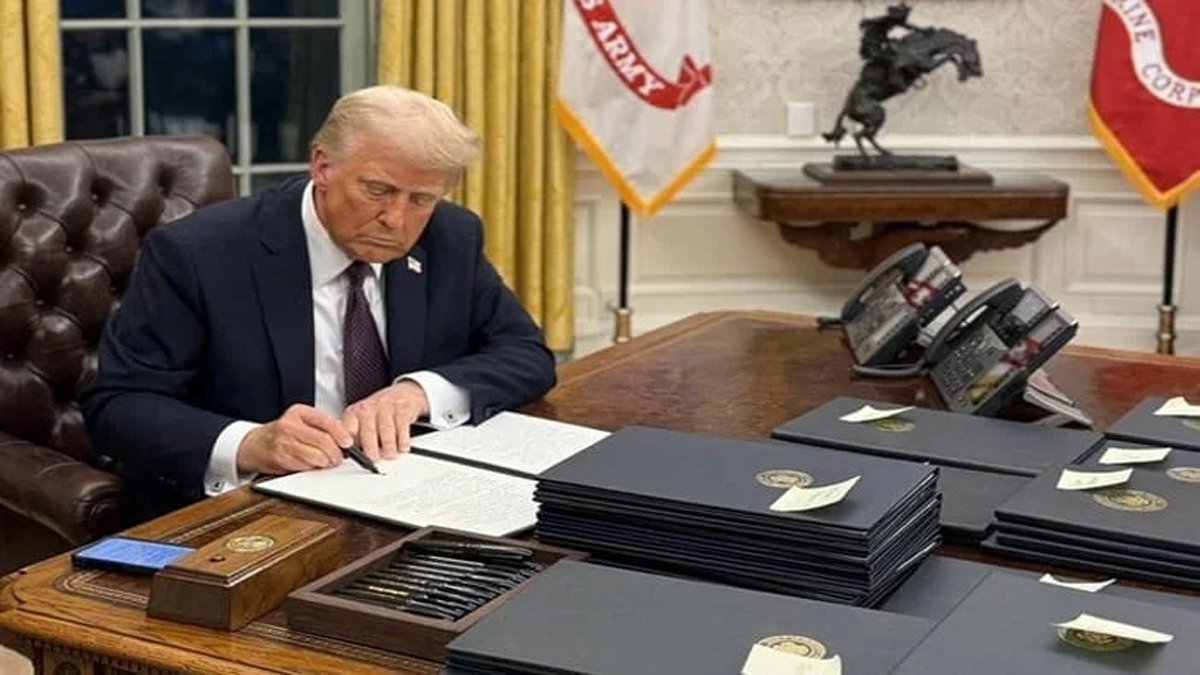
Washington, DC | January 9, 2026
The United States may sharply escalate pressure on countries buying Russian oil after President Donald Trump approved a bipartisan bill that could impose import tariffs as high as 500%, according to Republican Senator Lindsey Graham.
The proposed legislation targets nations purchasing Russian oil and uranium, with India and China at the center of Washington’s concerns. Both countries are among the largest buyers of discounted Russian crude since the start of the Russia-Ukraine war.
Senator Graham said on social media platform X that the bill received presidential approval following a recent meeting with Trump. He added that the legislation could be brought to the Senate floor for voting as early as next week.
If passed, the bill would grant Trump broad authority to levy punitive tariffs—potentially up to 500%—on imports from countries continuing energy trade with Russia. US lawmakers argue that such purchases indirectly finance Moscow’s war efforts.
The legislation is co-sponsored by Senator Graham and Democratic Senator Richard Blumenthal, highlighting rare bipartisan alignment on tightening economic pressure against Russia. Graham stated that the bill would significantly strengthen the president’s ability to pressure India, China, and Brazil to halt Russian oil imports.
He further claimed that while Ukraine has shown flexibility in peace efforts, Russian President Vladimir Putin has failed to demonstrate meaningful concessions, necessitating stronger economic action against countries fueling Russia’s war economy.
The bill had previously faced delays after Senate and House leadership postponed voting, partly due to Trump signaling that direct tariffs on imports from India could be more effective. India currently ranks as the world’s second-largest buyer of Russian oil, behind China.
Tensions have already escalated in recent years. Last year, the Trump administration imposed a 25% reciprocal tariff on Indian goods, along with an additional 25% penalty linked to Russian oil purchases, pushing duties on some products to 50%. US-China trade relations have also deteriorated, with tariffs reaching as high as 145% on Chinese goods, triggering retaliatory duties from Beijing.
If approved, the new sanctions bill could further intensify global trade friction and reshape energy and diplomatic ties among major economies.