The escalating conflict between Thailand and Cambodia has triggered swift international response, with the United Nations Security Council (UNSC) calling an emergency session to address what has now become a serious threat to international peace and security. This follows two consecutive days of cross-border violence, leaving more than 130,000 people displaced, inflaming bilateral tensions, and alarming the global diplomatic community.
Tensions Erupt on the Thailand-Cambodia Border
Over the past week, the historically volatile Thailand-Cambodia border has once again become a battleground. Violent exchanges of artillery and gunfire have been reported near the Preah Vihear and Ta Muen Thom temples, areas that have long stood at the heart of the territorial dispute between the two nations. Cambodia claims that Thai forces initiated unprovoked attacks, targeting Buddhist religious sites and civilian zones near the demarcation line.
In retaliation, Thailand has accused Cambodia of inciting the confrontation by mobilizing troops near sensitive posts and initiating cross-border fire into Thai territory. This mutual blame game has pushed the situation to the brink, with the possibility of further military escalation looming large over the region.
Mass Displacement: Over 130,000 Flee Border Villages
The human cost of the conflict has been severe. According to Thailand’s Ministry of Public Health, over 1.3 lakh (130,000) people have been forced to flee their homes, seeking safety in temporary shelters and camps set up away from the conflict zones. In Cambodia, thousands more have been uprooted, with entire communities in border provinces like Oddar Meanchey and Preah Vihear abandoning their villages in panic.
Emergency response teams are stretched thin, grappling with a growing humanitarian crisis. Food supplies, medical assistance, and safe drinking water are urgently needed as the displaced populations swell by the day.
Diplomatic Fallout: Ambassadors Recalled, Border Posts Closed
The diplomatic relationship between Thailand and Cambodia has deteriorated significantly. Both governments have recalled their ambassadors in protest. Numerous official border checkpoints—including at Chong Sa Ngam and O’Smach—have been shut down, cutting off critical trade and movement routes.
Tensions are being closely monitored by the Association of Southeast Asian Nations (ASEAN) and global superpowers alike, with fears that any further escalation could destabilize regional security and draw in neighboring countries.
UNSC Emergency Session: Global Call for Restraint and Dialogue
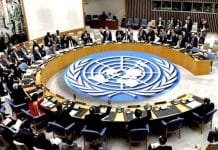
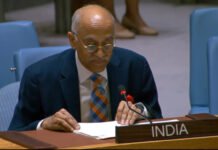
In response to Cambodia’s formal request, the UN Security Council held an emergency meeting under the topic “Threat to International Peace and Security.” All 15 UNSC member nations expressed grave concern over the situation and urged both countries to exercise maximum restraint.
UN diplomats confirmed that several permanent members including the United States, China, France, and the United Kingdom emphasized the importance of diplomacy and peaceful conflict resolution. The urgency of de-escalation through bilateral or multilateral dialogue was echoed by nearly every delegate in attendance.
ASEAN’s Critical Role as Mediator
As the current ASEAN chair, Malaysia’s Prime Minister Anwar Ibrahim has taken the lead in coordinating regional efforts to mediate the crisis. He has publicly appealed to both Phnom Penh and Bangkok to return to the negotiating table and avoid further military engagement. ASEAN is reportedly considering dispatching a special envoy to facilitate discussions between the two nations.
ASEAN’s credibility and regional influence are on the line, with the ongoing crisis posing a significant test to its core principle of peaceful resolution of disputes.
Historical Disputes Over Sacred Temples and Border Demarcations
At the core of this enduring conflict lies a deep-rooted territorial dispute over ancient religious sites. The Preah Vihear Temple, a UNESCO World Heritage site perched on a cliff in the Dângrêk Mountains, has been a subject of contention since the 1950s. Although the International Court of Justice (ICJ) awarded the temple to Cambodia in 1962, Thailand has contested the adjacent land area.
A similar dispute surrounds the Prasat Ta Muen Thom temple complex, with both countries staking claim to the area based on differing interpretations of colonial-era maps. Previous clashes in 2008, 2010, and 2011 have resulted in dozens of casualties, making this one of Southeast Asia’s most enduring border disputes.
Recent Triggers: Mine Blasts and Military Casualties
According to Cambodian and Thai defense sources, landmine explosions and skirmishes over the past fortnight have reignited tensions. On July 16 and July 23, Thai soldiers reportedly sustained injuries in separate incidents along the border. Meanwhile, Cambodian authorities have claimed that landmines planted by Thai troops have injured several civilians on their side.
Despite Cambodia’s declaration of a unilateral ceasefire starting July 24, Thai authorities have refused to honor the agreement, citing ongoing aggression from the Cambodian side. These contradictory stances have made negotiations extremely fragile.
International Powers Urge Calm and Cooperation
The global diplomatic community has reacted with urgency. The United States State Department has issued a statement urging restraint and proposing back-channel diplomacy to ease tensions. China, Japan, and France have also offered to mediate or support ASEAN-led initiatives, warning that continued fighting could destabilize the broader Indo-Pacific region.
Regional defense analysts warn that both militaries are now on high alert, with artillery units and ground troops mobilized along key segments of the disputed border.
Way Forward: Pressure for Peace, But No Breakthrough Yet
Despite growing international concern, a clear path to peace remains elusive. ASEAN’s attempts to mediate have yet to bring both parties to a formal negotiating table. UNSC members are deliberating the possibility of deploying UN observers to the region, although both Thailand and Cambodia would need to grant access.
There is widespread hope that diplomatic pressure and public outcry—especially within ASEAN—will force both governments to prioritize peace over nationalist posturing. However, given the history of distrust and deep-rooted territorial grievances, achieving a lasting resolution may require years of careful diplomacy.
Conclusion: A Regional Flashpoint Demanding Urgent Attention
The Thailand-Cambodia border conflict has once again highlighted the fragility of peace in Southeast Asia. With over 130,000 civilians displaced, border towns militarized, and diplomatic relations strained, the situation demands urgent international engagement.
The UNSC’s emergency meeting marks a critical step, but without meaningful action from Thailand, Cambodia, and ASEAN, the potential for future violence remains dangerously high. The world watches closely, hoping for dialogue over gunfire, and diplomacy over destruction.