New Delhi | January 7, 2026
Silver is rapidly transforming from a traditional precious metal into a strategically vital resource for industry and the global energy transition, prompting calls for a major policy rethink in India.
According to a report by the Global Trade Research Initiative (GTRI), India should stop viewing silver purely as a store of value or jewelry input and instead treat it as a critical industrial and energy-related material. The report recommends securing long-term overseas mining supplies, expanding domestic refining and recycling capacity, reducing dependence on finished silver imports, and diversifying import sources.
China’s Dominance in Global Silver Processing
The report highlights China’s overwhelming dominance in global silver processing. China imports large volumes of silver ore and concentrates, refines them domestically, and exports high-value products such as electronics components, medical devices, and solar panels.
In contrast, India largely imports refined silver. In 2024, India imported approximately $6.4 billion worth of refined silver, making it the world’s largest consumer of finished silver rather than a processor.
India’s Growing Import Dependence
GTRI founder Ajay Srivastava noted that India’s reliance on imports has been rising sharply. In FY2025, India exported silver products worth $478.4 million, while imports surged to $4.83 billion.
The dependence intensified further in 2025. Imports in October alone stood at $2.7 billion, marking a 529% year-on-year increase. Between January and November 2025, total imports reached $8.5 billion, with full-year imports projected to touch $9.2 billion.
Silver Supply Security Becomes Critical
The report warns that silver supply security is becoming as important as energy security in the evolving global landscape. This concern has grown after China introduced a license-based silver export system effective January 1, 2026. Under the new framework, only government-approved companies are permitted to export silver.
While the move does not amount to a full export ban, it has increased uncertainty in global supply chains and contributed to heightened price volatility.
Rising Strategic Importance of Silver
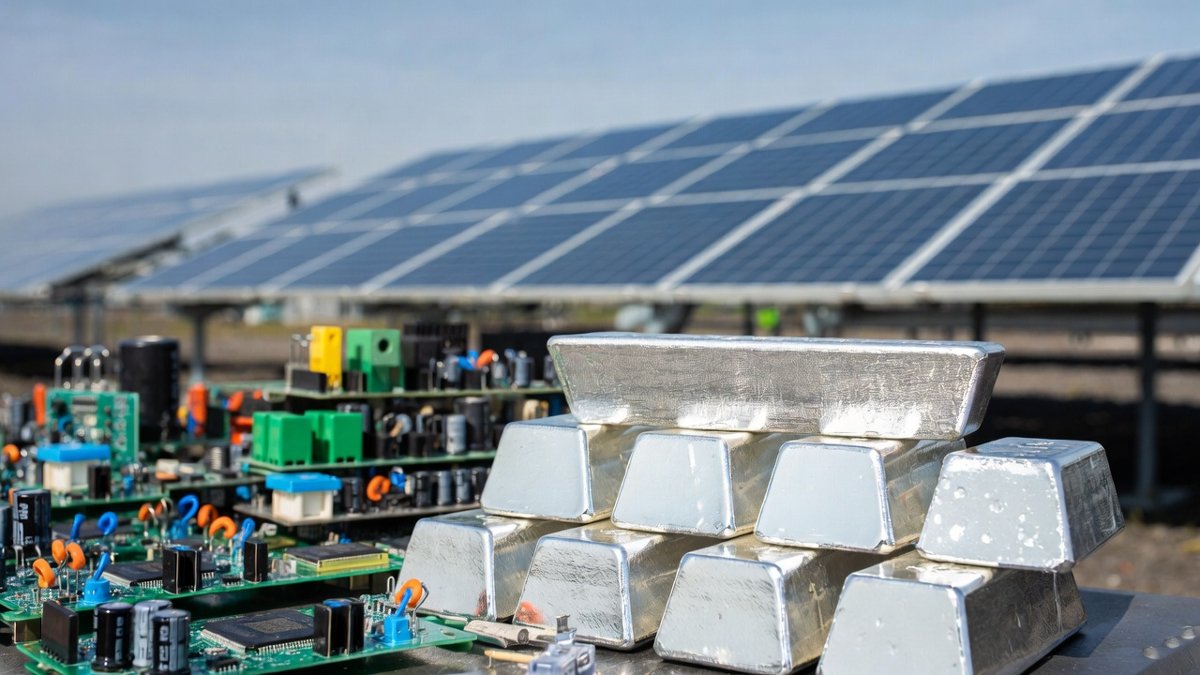
GTRI emphasized that silver’s strategic value is increasing rapidly, with 55–60% of global demand now coming from industrial use. Silver is essential in electronics, solar power, electric vehicles, defense applications, and medical technologies.
In solar photovoltaic cells, silver is a key conductive material. The solar sector alone now accounts for nearly 15% of global silver demand, a share expected to rise further as renewable energy adoption accelerates.
Global Trade in Silver Expands Sharply
Over the past two decades, global trade in silver has expanded significantly. Trade in silver ore and concentrates grew from just $0.1 billion in 2000 to $6.27 billion in 2024. Trade in refined silver has increased even more rapidly.
GTRI concluded that India must integrate silver into its long-term industrial and energy strategy to strengthen its position on both supply security and price stability amid intensifying global competition.