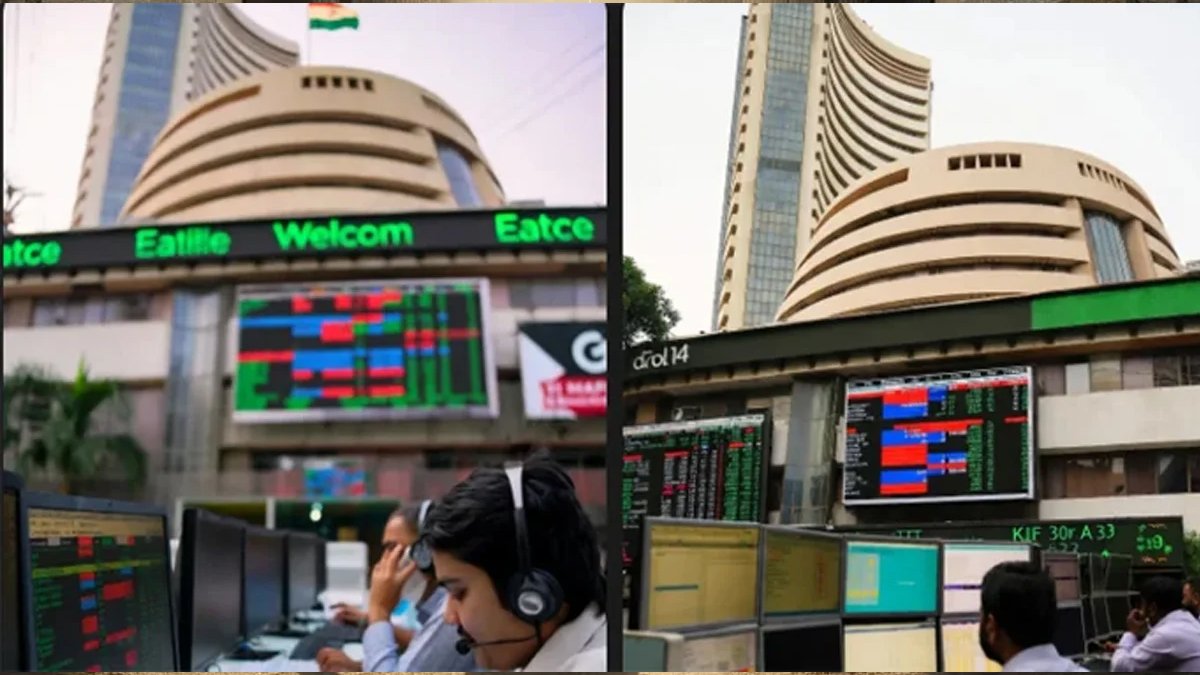
MUMBAI — January 9, 2026
Indian equity markets extended their losing streak for a fourth consecutive session on Thursday, with the benchmark BSE Sensex tumbling more than 1,600 points over four days and investor wealth shrinking by nearly ₹7.2 trillion, amid rising global and domestic concerns.
During the latest session, the 30-share Sensex dropped 780.18 points, or 0.92%, to close at 84,180.96. The broader NSE Nifty 50 declined 263.90 points, or 1.01%, settling at 25,876.85—slipping below the key psychological level of 25,900.
As a result of the sustained sell-off, the total market capitalization of companies listed on the BSE fell to about ₹474 trillion, down from nearly ₹481 trillion earlier in the week.
Key Reasons Behind the Market Sell-Off
US Tariff Threats and Russian Oil Tensions
Investor sentiment has been weighed down by renewed trade tensions between India and the United States. US President Donald Trump has warned of higher tariffs on Indian goods unless New Delhi addresses Washington’s concerns over India’s continued imports of discounted Russian crude oil. The US has already imposed tariffs of up to 50% on certain Indian products, while lawmakers are considering legislation that could levy penalties as high as 500% on countries importing Russian goods.
Heavy Pressure on Index Heavyweights
The decline has been led by heavyweight stocks such as Reliance Industries and HDFC Bank, both of which have fallen up to 4% this week. Market participants said the selling pressure was driven more by technical factors and settlement-related activity than by changes in company fundamentals. Sectorally, the metal index slid 1.9%, while the IT index erased previous gains to end nearly 1% lower. Retail major Trent also came under pressure amid rising competition.
Global Uncertainty and Venezuela Crisis
Global markets have remained cautious following heightened geopolitical tensions after Venezuela’s President Nicolás Maduro was detained by US forces. The development has raised concerns about potential volatility in oil and commodity markets. Asian equities also traded lower, with Japan’s Nikkei falling 1.2% and China’s CSI 300 index down 0.8%.
Concerns Over India’s Growth Outlook
On the domestic front, investors are growing cautious about the pace of economic growth in the second half of the fiscal year. While the National Statistical Office has projected GDP growth of 7.4% for FY2026, agencies such as ICRA and MK Global have flagged potential moderation in growth due to the impact of US tariffs on exports and a possible slowdown in government capital expenditure.
Weak Market Sentiment and Technical Pressure
Market analysts said equities are currently trading in a non-directional zone. A sustained move below key technical levels—around 26,050 on the Nifty and 84,600 on the Sensex—could trigger further selling. Until markets regain critical resistance levels, traders are advised to remain cautious.