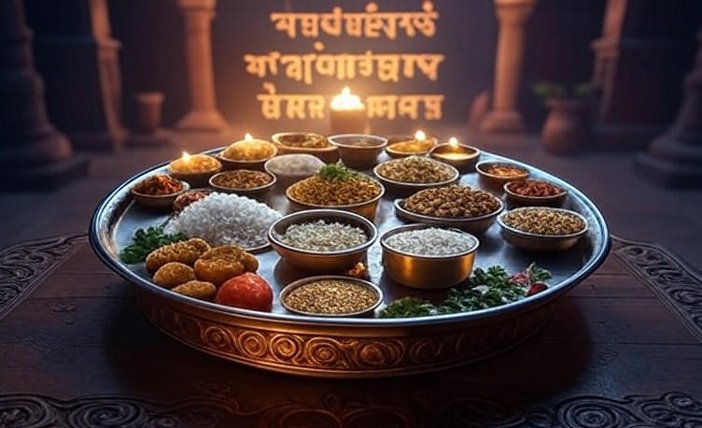
In Sanatan Dharma, food is not merely a means of survival; it is considered a sacred offering that shapes our body, mind, and soul. Scriptures and traditions emphasize that “Jaisa ann vaisa mann” — our thoughts reflect the food we eat. This is why eating food with discipline, purity, and gratitude is considered a spiritual practice.
Below, we explore the ancient rules of eating in Sanatan Dharma that continue to guide millions toward a healthier and more mindful life.
1. Purification Before Eating
Before starting a meal, it is necessary to wash hands, feet, and mouth properly. This is both a hygienic and spiritual practice.
One should pray to Annadevta and Goddess Annapurna, expressing gratitude for food.
A prayer should also be made for the welfare of all living beings, wishing that no one remains hungry.
2. Purity in Cooking and Serving
The act of cooking is seen as a sacred duty.
The cook must bathe, maintain a pure mind, and preferably chant mantras while preparing meals.
Before serving the family, three rotis should be set aside — one for the cow, one for the dog, and one for the crow.
Food is first offered to Agnidev (the sacred fire) before being served to humans.
3. Correct Time to Eat
Sanatan Dharma prescribes eating only twice a day — in the morning and evening.
The digestive fire (Jatharagni) is strongest for two hours after sunrise and about two and a half hours before sunset.
One meal a day is considered yogic (for Yogis).
Two meals a day is for those living a worldly life (Bhogis).
💡 Traditional Saying:
“Eat breakfast like a king, share lunch like a friend, and give dinner to your enemy.”
4. Right Direction While Eating
The direction you face while eating is believed to influence energy and health.
East & North: Best directions for eating, bringing health and prosperity.
South: Food eaten facing this direction is believed to reach negative energies.
West: Associated with disease and ill-health.
5. Conditions to Avoid While Eating
Food should not be eaten:
On the bed or in broken utensils.
While standing, wearing shoes, or covering the head.
During quarrels, loud noise, or negative discussions.
Under Peepal or Banyan trees.
When there is a strong urge to urinate or defecate.
Eating with anger, fear, jealousy, greed, or hatred is considered harmful, as food consumed in such states is not digested properly.
6. Foods That Should Be Avoided
Sanatan Dharma prescribes avoiding certain types of food:
Heavy foods that strain digestion.
Overly spicy or overly sweet dishes.
Leftover or half-eaten foods.
Food touched by animals or dogs.
Food served by a menstruating woman or prepared during a shraddha (ritual for ancestors).
Stale or blown-cooled food (cooled by mouth).
Food with fallen hair or served with disrespect.
Food from a miser, a king, a prostitute, a liquor seller, or a usurer.
7. Rules While Eating
Silence is golden: Stay quiet while eating to maintain focus and mindfulness.
Avoid overeating at night.
Speak only positive words if necessary.
Do not discuss problems during meals.
Always chew food properly.
Traditional Eating Sequence:
Eat sweet first.
Then salty and spicy foods.
End with bitter or sour items.
Digestive Order:
Eat juicy foods first, followed by heavy foods, and finish with liquid dishes.
One who eats moderately is blessed with health, strength, long life, happiness, beauty, and good children.
8. What Not To Do After Eating
Avoid the following immediately after meals:
Drinking water, tea, or other beverages.
Running, riding, or heavy physical activity.
Sitting idle or defecating right after eating.
9. What To Do After Eating
During the day, walk for a while after meals.
At night, walk 100 steps, then lie on the left side or sit in Vajrasana for digestion.
One hour after meals, sweet milk or fruits can be consumed for better digestion.
10. Food Combinations to Avoid
Avoid curd, sattu, sesame, and heavy foods at night.
Do not mix milk with salt, sour foods, or jackfruit.
Honey and ghee should never be consumed in equal quantities.
Avoid eating khichdi with milk or kheer together.
Conclusion
The rules of eating in Sanatan Dharma are a blend of science, spirituality, and health-conscious living. They emphasize purity, moderation, direction, timing, and gratitude, ensuring that food nourishes not only the body but also the mind and soul.
Following these age-old practices can lead to better digestion, sound health, inner peace, and spiritual upliftment — proving once again that Sanatan wisdom is timeless.