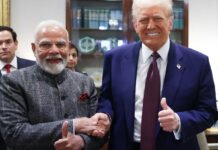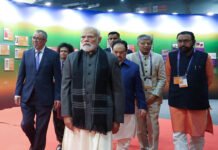
In a significant move on the global diplomatic stage, Prime Minister Narendra Modi has arrived in the Maldives following the completion of his visit to the United Kingdom, marking the second leg of his impactful two-nation tour. This strategic trip underscores India’s growing role in international diplomacy and economic partnership, as Modi not only graced the 60th Independence Day celebrations of the Maldives as the chief guest but also strengthened India’s bilateral ties with the UK through a landmark Free Trade Agreement (FTA). Meanwhile, France’s political stance in recognizing Palestine as an independent country adds a compelling geopolitical dimension to this eventful week.
Modi Reaches Maldives for Independence Day Celebration
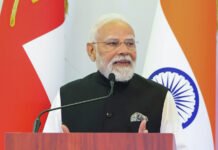
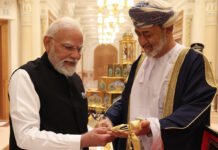
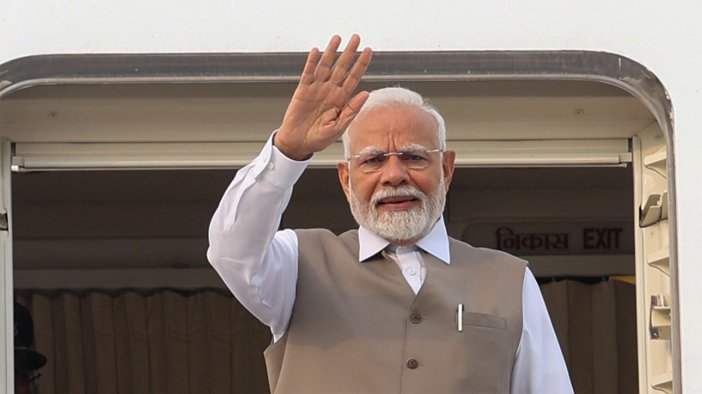
Prime Minister Narendra Modi landed in the Maldivian capital Malé today, July 25, upon the invitation of President Dr. Mohammad Muizzu, marking his third official visit to the island nation. His presence as the chief guest for the Maldives’ 60th Independence Day celebration not only signals India’s commitment to its ‘Neighbourhood First’ policy but also reinforces the Indo-Maldivian strategic maritime partnership.
The grand ceremony is expected to include a series of high-level bilateral talks, cultural exchange programs, and defense cooperation announcements. This visit is crucial in the backdrop of China’s increasing influence in the Indian Ocean region, and India’s aim to fortify its presence through diplomacy and collaboration.
Historic Record: Modi Becomes Second Longest-Serving Prime Minister
July 25 also marked another major milestone in Indian history: PM Narendra Modi has now become the second longest-serving Prime Minister of India, overtaking former Prime Minister Indira Gandhi’s record. With this, Modi stands next only to Jawaharlal Nehru, who held the office for 16 years and 286 days. This achievement is particularly notable as Modi is the first Prime Minister born after India’s independence in 1947 to hold the position for such an extended period, and the first from a non-Hindi speaking state to do so.
This personal political landmark adds a symbolic layer to Modi’s current international tour, representing India’s long-term leadership stability on the global stage.
India-UK Free Trade Agreement Sees Breakthrough Discussions
While in the United Kingdom, PM Modi engaged in extensive discussions with newly-elected British Prime Minister Keir Starmer at the historic Chequers Country House. The focal point of their dialogue was the highly-anticipated India-UK Free Trade Agreement (FTA), which aims to foster stronger economic synergy between the two Commonwealth nations.
Modi humorously described the meeting as a “tea conversation,” referencing the informal yet impactful tone of their discussions. However, beyond the symbolic cups of tea lay critical subjects such as trade liberalization, counter-terrorism cooperation, climate sustainability, and investment flows.
Both sides have reportedly agreed to expedite the concluding stages of the FTA, which promises to eliminate barriers in multiple sectors, including automobiles, pharmaceuticals, information technology, and textiles. India is expected to gain access to UK’s high-end technology and financial services, while British firms eyeing the Indian market stand to benefit from reduced tariffs and simplified regulations.
Global Impact of India-UK Trade Pact
This FTA is not just a trade deal—it is a geopolitical realignment. As the UK pivots toward post-Brexit global alliances, India becomes a key strategic partner, offering a rapidly growing economy, democratic values, and a shared colonial legacy that informs today’s bilateral trust.
Analysts suggest that the agreement could boost trade volume by over $40 billion annually over the next decade, creating thousands of jobs in both countries. Additionally, sectors such as cybersecurity, artificial intelligence, green energy, and academic exchange are likely to receive an influx of new opportunities and joint ventures.
France Takes Bold Diplomatic Step: Recognizes Palestine
In a parallel development that adds international weight to this eventful week, France has officially recognized Palestine as an independent country, a move that reverberated across global political corridors. While not directly related to Modi’s tour, this announcement reshapes the Middle East peace process and positions France as a proactive voice in international diplomacy.
India, which traditionally supports a two-state solution to the Israel-Palestine conflict, has not yet commented on France’s declaration. However, Modi’s stature and India’s balanced relations with both Israel and Palestine are expected to play a crucial role in future dialogues.
Terrorism and Strategic Security: India and UK Take a Unified Stand
Another key subject of Modi and Starmer’s meeting was the rising threat of global terrorism. The leaders expressed mutual concern about the spread of radical ideologies, particularly in South Asia and the Middle East, and emphasized the need for joint intelligence sharing, counter-radicalization programs, and international cyber law enforcement cooperation.
Given recent developments in Afghanistan, tensions in the Red Sea, and rising cyber threats, this strategic dialogue reinforces the importance of Indo-UK defense ties, including joint military exercises and maritime security coordination in the Indian Ocean.
Maldives Tour: Beyond Symbolism, Real Strategic Intent
While the ceremonial presence of PM Modi in the Maldives garners media attention, the real story lies in India’s strategic maritime vision. The Maldives holds immense geo-strategic importance due to its proximity to key sea lanes in the Indian Ocean.
During his visit, Modi is expected to inaugurate several India-funded infrastructure and defense projects, including:
Coastal surveillance radar systems
Renewable energy installations
Educational and digital infrastructure programs
Expansion of medical tourism
These projects reflect India’s intent to balance regional power dynamics while promoting sustainable development in its neighborhood.
Conclusion: A Week of Diplomacy, Deals, and History
Prime Minister Modi’s back-to-back engagements in London and Malé have reinforced India’s rising global profile. From the India-UK Free Trade Agreement to the Maldives Independence Day celebrations, each move has been calculated to strengthen India’s diplomatic leverage, economic footprint, and strategic alliances.
Meanwhile, global developments such as France’s recognition of Palestine and broader discussions on terrorism further underscore the dynamic and complex nature of international politics today.
As PM Modi continues to redefine India’s role on the world stage, these visits are not isolated events but building blocks in India’s long-term global strategy.