Paris | December 2, 2025 :
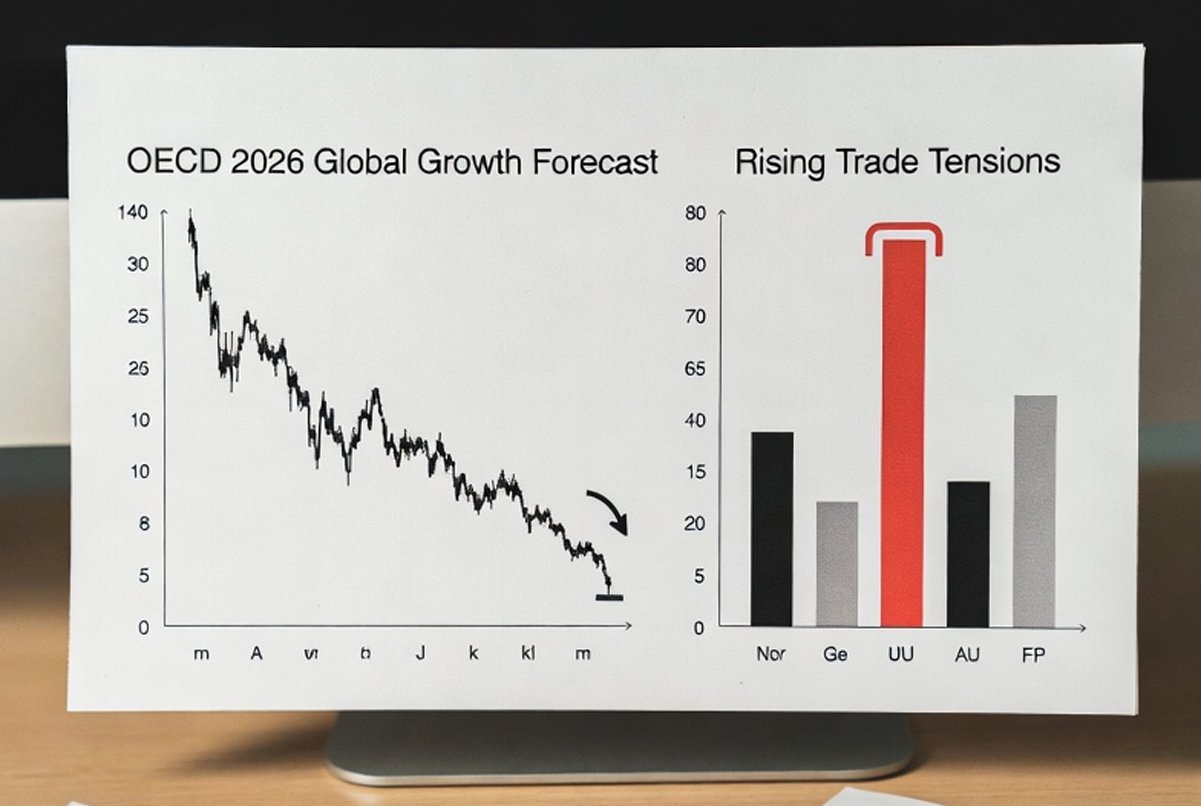
OECD Warns of Trade Tensions as Global Growth Slows to 3.1% in 2026 Outlook
The Organisation for Economic Co-operation and Development (OECD) released its latest Economic Outlook on Tuesday, forecasting global GDP growth at 3.1% in 2026, a marginal dip from the previous 3.2%, as escalating U.S. tariff actions under President Donald Trump, rising inflation, and supply chain vulnerabilities cast a shadow on the world economy.
Secretary-General Mathias Cormann, while presenting the report in Paris, warned that protectionist policies are “intensifying global uncertainty,” urging the G20 to accelerate structural and fiscal reforms to safeguard growth.
Key Country Forecasts
United States: 2.5%
China: 4.7%
India: 6.8% (fastest among major economies)
Eurozone: 1.2% (dragged by weak Germany and Italy)
Chief Economist Clare Lombardelli cautioned that ongoing supply chain disruptions could shave up to 0.5% off global growth, especially if trade tensions escalate. The report covers 44 major and emerging economies.
Emerging Market Pressures
The OECD highlighted that inflation remains stubbornly high across parts of Asia, Africa, and Latin America. In South Asia, Nepal’s tea exports were flagged for failing international safety tests, endangering nearly $50 million in annual exports.
Meanwhile, Southeast Asia faces over $3 billion in economic losses due to widespread flooding, further straining regional supply chains.
Global Financial Signals
The baseline scenario assumes three Federal Reserve rate cuts in 2026, though any escalation in the Middle East could pose strong downside risks. Investors are also watching the December RBI Monetary Policy Committee meeting as the Indian rupee trades near ₹83.5 per USD.
Green Investment Still Key
The Outlook stresses that green infrastructure investments could boost long-term GDP by up to 1%, especially for countries prioritizing energy transition and climate resilience.
IMF Managing Director Kristalina Georgieva supported the OECD’s call for fiscal discipline, urging global coordination to reduce economic fragmentation.