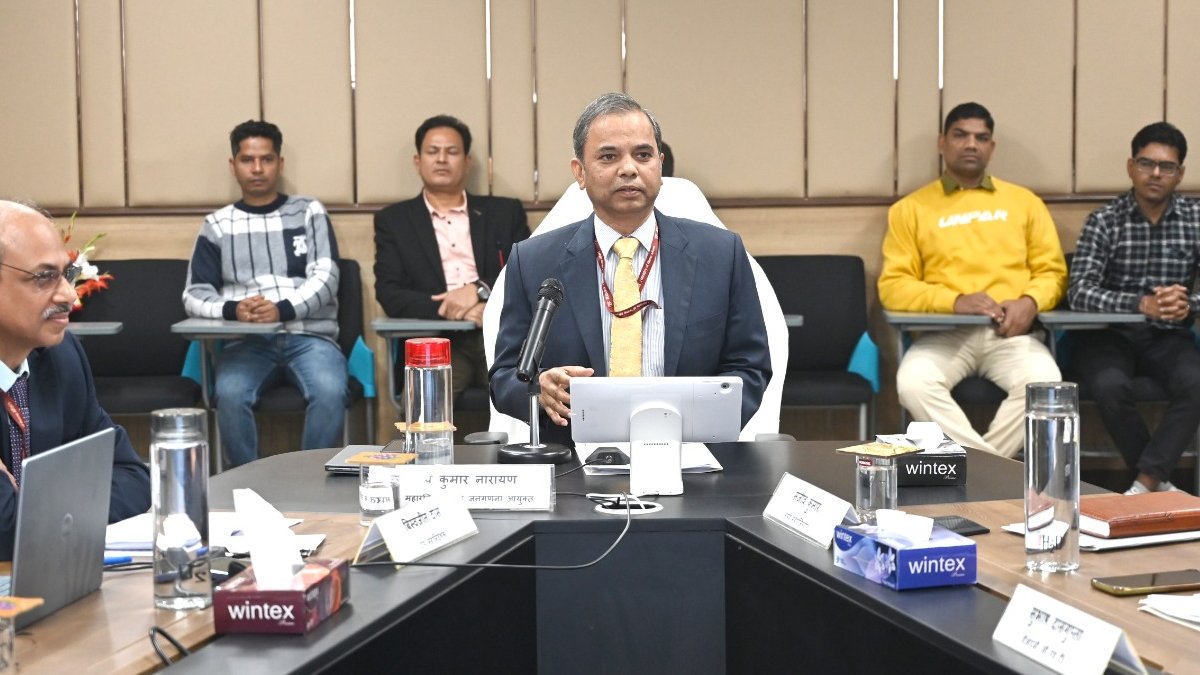
NEW DELHI — January 8, 2026
The first phase of India’s Population Census 2027 will be conducted from April 1 to September 30, 2026, covering all States and Union Territories, according to a notification issued by the Office of the Registrar General and Census Commissioner of India.
Known as the houselisting operations (HLO) phase, the exercise will involve a door-to-door survey lasting 30 days in each State and Union Territory, with individual administrations announcing their respective schedules. The phase will also include a 15-day self-enumeration window, allowing households to submit information digitally before field visits begin.
During the houselisting phase, households will be asked to provide detailed information on housing conditions and living standards. This includes construction materials used in homes, access to basic facilities, sources of drinking water, cooking fuel, and consumption patterns such as the main cereal consumed. Enumerators will also collect data on household composition, including family structure and the number of married couples residing in each home.
The second phase of the Census, known as population enumeration (PE), is scheduled for February 2027. For the first time since India’s independence, caste identities will be officially enumerated as part of the national census. The decision to include caste data was approved by the Cabinet Committee in April 2025.
The upcoming census will be India’s 16th overall population count and the eighth conducted after independence. Authorities confirmed that it will be fully digital, marking a major shift from earlier paper-based exercises.
A pre-test of the census process was conducted between November 10 and November 30, 2025, in selected areas across the country. The pilot involved 35 questions and was aimed at assessing data collection methods, digital infrastructure, and field-level execution.
Around three million field functionaries will be deployed nationwide for the census, including enumerators, supervisors, master trainers, charge officers, and Principal and District Census Officers. These personnel will be responsible for data collection, supervision, and monitoring and will receive appropriate honoraria in addition to their regular official duties.
Registrar General and Census Commissioner of India Mritunjay Kumar Narayan said the exercise is designed to generate comprehensive, high-quality data to support evidence-based policymaking and long-term development planning.