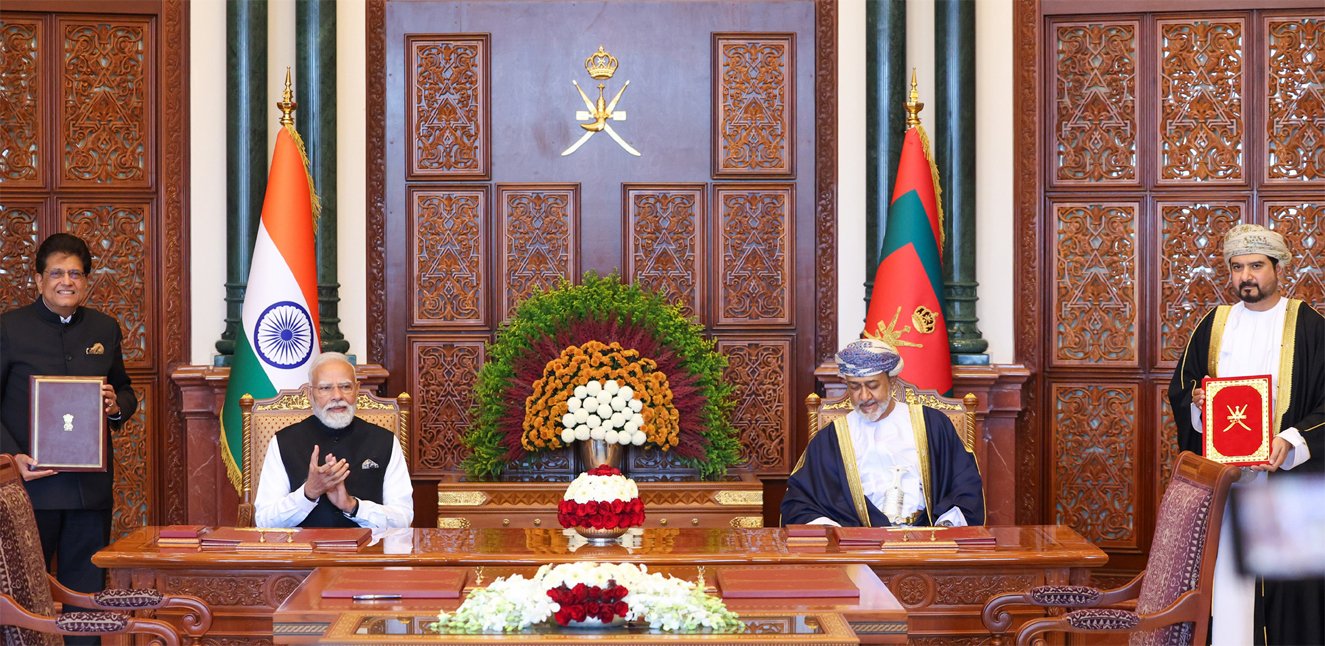
Muscat, Oman | December 18, 2025
India and Oman on Thursday signed a historic Comprehensive Economic Partnership Agreement (CEPA), marking a major milestone in bilateral trade and opening wide-ranging opportunities for Indian exporters, service providers, and professionals across the Gulf region.
The agreement ushers in a new phase of economic cooperation and is Oman’s first bilateral trade pact since its 2006 agreement with the United States, underscoring its strategic importance for India’s global trade ambitions.
Trade Ties Cross $10 Billion
Bilateral trade between India and Oman crossed $10 billion in FY 2024–25, while nearly 700,000 Indians living in Oman remit around $2 billion annually to India. The CEPA is expected to further strengthen these long-standing economic and people-to-people ties.
Key Highlights of the India–Oman CEPA
1. Duty-Free Entry for Indian Goods
Oman has offered duty-free access on 99.38% of India’s exports by value
Zero-duty benefits cover 98.08% of Omani tariff lines, with 97.96% eliminated immediately
Major beneficiaries include gems and jewelry, textiles, leather, footwear, sports goods, engineering products, pharmaceuticals, and automobiles
For the first time, Oman has made comprehensive commitments on traditional medicine, creating global growth opportunities for India’s AYUSH and wellness sectors
Faster approvals for Indian pharmaceuticals already cleared by USFDA, EMA, and UKMHRA, reducing market entry delays
2. Services Trade and Professional Mobility
Oman’s services imports stand at $12.52 billion, with India currently holding just 5.31% share
Significant easing of Mode 4 (movement of professionals) norms
Intra-corporate transferee quota increased from 20% to 50%
Contract-based service duration extended from 90 days to two years, with an option for further extension
100% FDI permitted for Indian companies in IT, business services, education, healthcare, and audio-visual sectors
3. Protection for Sensitive Indian Sectors
India safeguarded domestic interests by excluding sensitive products such as dairy, tea, coffee, rubber, tobacco, gold and silver bullion, and scrap metals from tariff concessions. Select Omani exports will follow tariff-rate quotas (TRQs) to protect Indian industries.
Oman Emerges as India’s Gateway to the Gulf and Africa
With over 6,000 Indian businesses operating in Oman, the country is positioned as a key gateway to Middle Eastern and African markets. The CEPA is India’s second major trade agreement in six months after the UK pact, reflecting its aggressive global trade strategy.
Both nations also agreed to explore social security coordination once Oman’s contributory social security system is implemented.