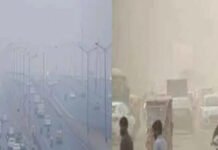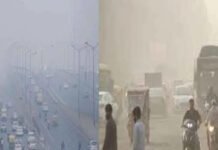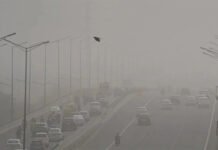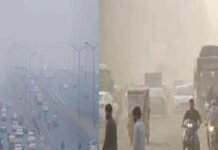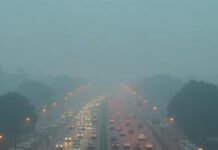
New Delhi, : A groundbreaking 2025 Air Quality Life Index (AQLI) report has declared air pollution as India’s most severe public health threat, reducing the average life expectancy by 5.3 years nationwide and by an alarming 10 years in Delhi, one of the world’s most polluted capitals.
The assessment, drawing on satellite measurements and long-term health datasets, found that 150 of India’s 256 monitored cities exceeded PM2.5 safety limits throughout the year. The country’s average PM2.5 concentration stands at 58 μg/m³, more than 10 times the WHO’s recommended limit of 5 μg/m³.
A Public Health Emergency
The report attributes 2.1 million premature deaths annually to toxic air, linking pollution to rising rates of:
Chronic respiratory disease
Heart and cardiovascular complications
Cognitive decline, especially in children
Pregnancy-related complications
Rural India—often overshadowed in air quality conversations—showed rising PM levels driven by biomass-based cooking fuels, highlighting inequality in clean-energy access.
Government Response and Policy Push
Union Environment Minister Bhupender Yadav announced a major expansion of the National Clean Air Programme (NCAP), backed by a ₹10,000 crore allocation, with the aim of achieving a 50% reduction in emissions by 2030 through:
Aggressive electric vehicle mandates
Stubble management technologies to curb seasonal farm fires
Industrial emission audits
Municipal waste-to-energy initiatives
However, environmental groups remain skeptical. Greenpeace India criticized lax enforcement, pointing out that only 20% of high-pollution zones comply with mandated emission norms.
Delhi: The Epicenter of the Crisis
Delhi once again emerged as the epicenter of India’s air pollution emergency, with AQI readings reaching an extreme 450 this winter season, forcing:
School closures across NCR
Suspension of outdoor sports
Reintroduction of odd-even road schemes
Doctors warn of a “silent epidemic” of asthma and lung disorders among children.
Economic Costs and National Implications
Air pollution costs India an estimated $95 billion annually in lost productivity, healthcare expenditures, and reduced labor efficiency. Report lead Michael Greenstone of the Energy Policy Institute noted that improved air quality could, on average, add 5+ years to the life expectancy of every Indian.
Urgent Recommendations
The AQLI report urges the government to:
Integrate air quality education into school curricula
Subsidize clean fuels for 300 million households
Strengthen federal-state cooperation
Deploy real-time enforcement mechanisms
A Call for Immediate National Coordination
Experts warn that without urgent, coordinated federal and state action, India risks facing a public health catastrophe. With environmental, economic, and medical pressures converging, the report underscores that air pollution is no longer merely an environmental issue—but a profound human survival challenge.