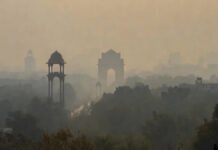
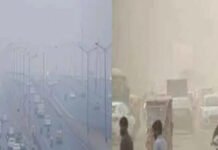
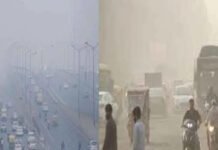
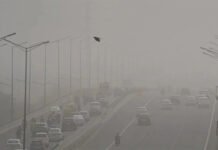
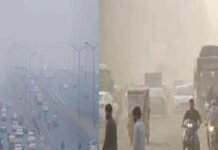
New Delhi , December 15, 2025 : Delhi’s worsening air pollution crisis has triggered fresh emergency measures, with schools shifting to hybrid classes and courts moving to virtual proceedings to reduce public exposure to hazardous conditions. The decision comes amid persistently poor air quality and an orange alert for dense fog issued by the India Meteorological Department (IMD), affecting Delhi and neighboring regions such as Noida and Ghaziabad.
In a significant move, Chief Justice of India (CJI) Surya Kant advised all Bar members, parties-in-person, and court officials to conduct proceedings in hybrid mode via video conferencing, effective immediately. The advisory aims to minimize health risks for legal professionals and litigants as Air Quality Index (AQI) levels remain in the “very poor” to “severe” category across large parts of the National Capital Region (NCR).
Following similar concerns, Delhi schools transitioned to hybrid learning from Monday, allowing students to attend classes both online and offline. Authorities cited sustained smog conditions, reduced visibility, and rising respiratory complaints—particularly among children and the elderly—as key reasons behind the move. Residents have also been urged to exercise caution while commuting, especially during early morning and late evening hours when fog density is highest.
The pollution spike has sparked sharp political reactions. Opposition leaders criticized the Delhi government and Chief Minister Rekha Gupta, accusing the administration of failing to implement effective preventive measures in time. Congress leader Alka Lamba demanded accountability, stating that children and vulnerable populations are bearing the brunt of administrative inaction.
Environmental experts attribute the current pollution crisis to a combination of vehicular emissions, ongoing construction activity, and stubble burning in neighboring states. They have called for stricter enforcement of GRAP-4 measures, including tighter curbs on traffic, construction bans, and enhanced monitoring of industrial emissions.
As Delhi grapples with one of its most challenging winter pollution spells this year, public health experts warn that prolonged exposure could have serious long-term consequences, underscoring the urgent need for coordinated and sustained action.