
New Delhi, India — January 11, 2026
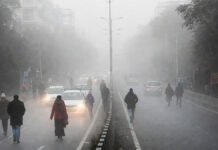
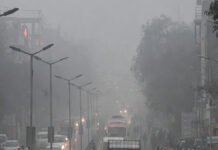
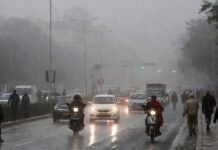
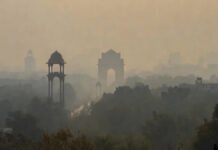
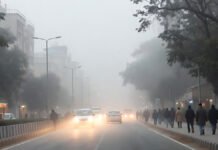
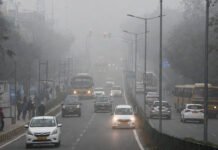
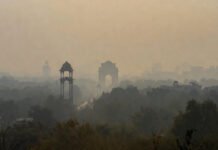
Delhi residents are facing a dual challenge of biting cold and deteriorating air quality, as pollution levels remained in the poor to very poor category across the national capital on Sunday morning.
According to data released by the Air Quality Early Warning System for Delhi, the city’s overall Air Quality Index (AQI) stood at 297, placing it in the poor category. On Saturday, air quality had slipped into the very poor range due to a change in wind direction and reduced wind speed, limiting the dispersion of pollutants.
While a marginal improvement was observed on Sunday morning, pollution levels continue to pose health risks, especially for children, the elderly, and people with respiratory conditions.
Area-Wise AQI Levels in Delhi (As per CPCB)
Data from the Central Pollution Control Board (CPCB) shows alarming AQI levels in several parts of the city:
Alipur: 266
Anand Vihar: 339
Ashok Vihar: 309
Aya Nagar: 227
Bawana: 306
Burari: 274
Chandni Chowk: 332
Other major locations recorded the following AQI levels:
DTU: 286
Dwarka Sector-8: 307
IGI Airport (T3): 199
ITO: 297
Jahangirpuri: 342
Lodhi Road: 244
Mundka: 317
Najafgarh: 335
Narela: 304
Punjabi Bagh: 293
RK Puram: 334
Rohini: 317
Sonia Vihar: 313
Vivek Vihar: 317
Wazirpur: 326
Most of these areas remain in the poor or very poor categories, highlighting the widespread nature of the pollution crisis.
What the Air Quality Index Indicates
The Air Quality Index (AQI) measures pollution levels and their potential impact on health:
0–50: Good
51–100: Satisfactory
101–200: Moderate
201–300: Poor
301–400: Very Poor
401–500: Severe
Health experts warn that AQI levels above 300 can cause respiratory distress even in healthy individuals and pose serious risks to those with pre-existing medical conditions.
Outlook
With low wind speeds and cold weather conditions persisting, authorities expect limited improvement in air quality over the coming days. Residents are advised to limit outdoor activities and follow health advisories until pollution levels decline.