
New Delhi, India | December 25, 2025
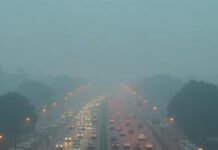
The Central Pollution Control Board (CPCB) has warned that Delhi’s air quality is likely to worsen to the “very poor” category by Saturday, raising health concerns, especially for people with respiratory conditions.
Despite stronger wind speeds and bright sunshine throughout the day, Delhi’s air quality on Thursday remained in the “poor” category. The city recorded an Air Quality Index (AQI) of 271, showing an improvement of 37 points compared to Wednesday.
NCR Air Quality Status
Among the National Capital Region (NCR) cities, Ghaziabad recorded the worst air quality with an AQI of 280, falling in the poor category. Other cities reported the following AQI levels:
Greater Noida: 268
Noida: 256
Gurugram: 239
Faridabad: 215 (cleanest in NCR, though still poor)
Major Sources of Pollution
According to Delhi’s Decision Support System (DSS) for air quality management, pollution sources were distributed as follows:
Vehicular emissions: 18.5%
Peripheral industrial sources: 9.3%
Residential areas: 4.53%
Construction activities: 2.52%
Road dust: 1.33%
Waste burning: 1.62%
Meteorological Conditions
The CPCB reported that winds on Thursday blew from the northwest at around 10 km/h. The maximum mixing height was estimated at 1,000 meters, while the ventilation index stood at 3,200 square meters per second, conditions that moderately supported pollutant dispersion.
At 3:00 pm, particulate matter levels were recorded at:
PM10: 201 micrograms per cubic meter
PM2.5: 107.3 micrograms per cubic meter
Both readings exceed safe limits.
Health Advisory
With air quality expected to slip into the very poor category on Saturday, authorities have cautioned that residents may experience breathing difficulties, eye irritation, coughing, and headaches. People with asthma, heart conditions, and other respiratory illnesses are advised to limit outdoor activities and take preventive measures.