New Delhi | November 28, 2025:
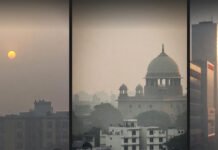
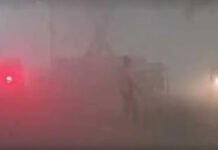
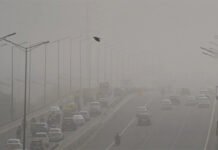
Delhi woke up to hazardous, “severe-plus” air quality on Thursday as the city’s Air Quality Index (AQI) surged to 450, forcing authorities to immediately trigger Stage IV of the Graded Response Action Plan (GRAP) — the highest emergency tier.
The Commission for Air Quality Management (CAQM) activated the measures at 8:00 AM IST, shutting down all construction activities, suspending in-person classes for Grades 1 to 5, and restricting entry of non-essential trucks into the national capital. PM2.5 concentrations hit 600 µg/m³, nearly 10 times the safe limit, contributing to 20 overnight hospitalizations for acute respiratory distress.
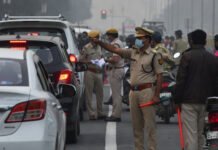
Environment Minister Bhupendra Yadav announced the return of the odd-even vehicle rationing scheme from November 29, aimed at reducing traffic emissions. Delhi Chief Minister Atishi said 500 water sprinklers and anti-smog towers were being deployed to reduce dust levels, while emergency health advisories urged children, senior citizens, and cardiac patients to remain indoors.
The Central Pollution Control Board (CPCB) chair Prashant Gargava attributed the sudden spike to a combination of stubble burning contributing 40%, stagnant winds, and post-Diwali pollution residue. Hospitals across the NCR region reported a 15% rise in asthma cases among children, while a 65-year-old resident, Ramesh Kumar, succumbed to respiratory complications, officials confirmed.
This marks Delhi’s worst air emergency since the 2021 peak of AQI 480, underscoring persistent winter pollution challenges. Meteorological officials reported wind speeds of just 5 km/h, offering little chance of dispersion until at least December 2.
Neighboring states including Haryana, Uttar Pradesh, and Rajasthan have implemented parallel curbs across the NCR, affecting nearly 20 million residents. With construction halted, truck movement restricted, and schools partially closed, economic and daily activities have been significantly disrupted.
As of 1:00 PM IST, health authorities issued red alerts, advising the use of N95 masks and minimizing outdoor exposure as Delhi grapples with one of its worst air quality episodes in recent years.