Colombo, Sri Lanka | November 28, 2025 —
Cyclone Ditwah continued its destructive sweep across Sri Lanka on Friday, leaving at least 56 people dead and over 200,000 displaced, as the island nation faced one of its worst climate disasters in recent years. The powerful storm, which intensified rapidly over the Bay of Bengal, brought wind speeds touching 120 km/h, unleashing landslides and severe flooding across southern districts including Ratnapura, Matara, and Galle.
Sri Lankan President Ranil Wickremesinghe declared a national state of emergency and urged residents in vulnerable zones to evacuate immediately. With infrastructure damage estimated at $150 million, and more than 1 million households suffering prolonged power outages, Colombo issued urgent calls for international assistance.
Meteorologists warn that heavy rainfall will persist until December 1, with the storm system likely to influence weather conditions along India’s southeastern coastline, particularly in Tamil Nadu and Andhra Pradesh.
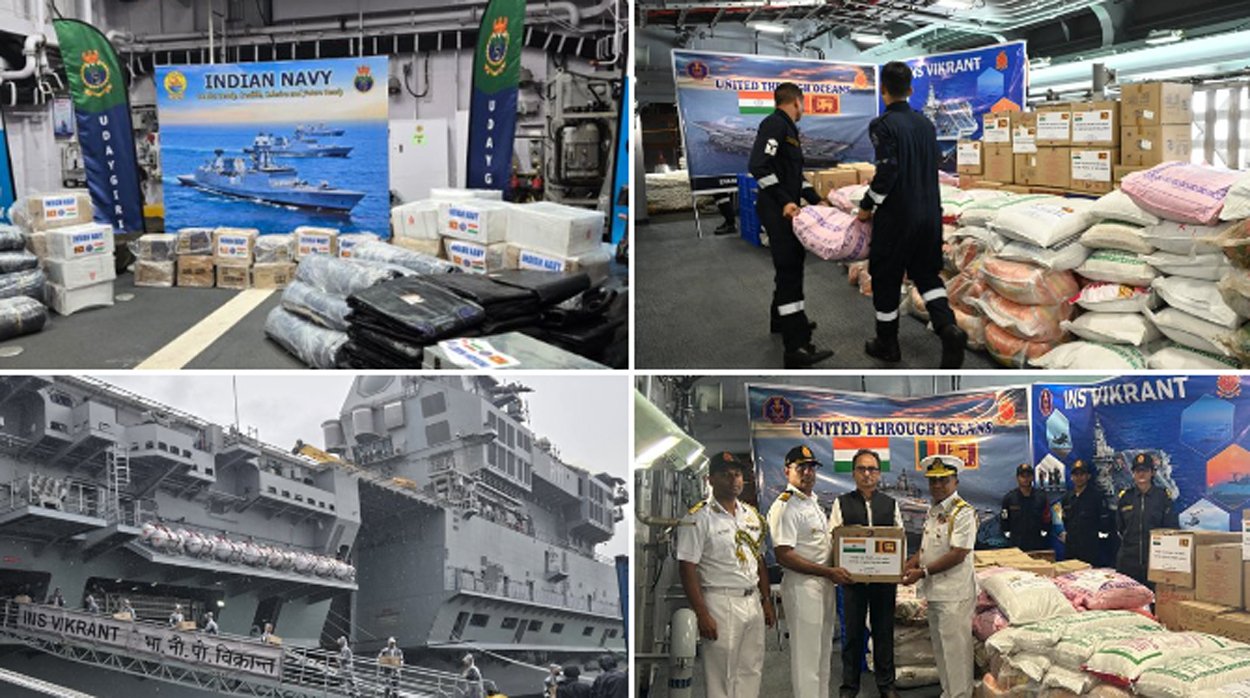
In a strong display of regional solidarity, India deployed its indigenously built aircraft carrier INS Vikrant, carrying 500 naval personnel, helicopters, and emergency relief supplies including medicines, food packets, tents, and water purification units. The vessel arrived off the Colombo coast by Friday evening as part of India’s ongoing “Neighborhood First” humanitarian commitment. External Affairs Minister S. Jaishankar supervised the mission, coordinating closely with Sri Lankan authorities.
Environmental scientists have linked the cyclone’s unusual intensity to global warming, with rising average temperatures—now 1.2°C above pre-industrial levels—fueling more frequent and severe storms across the Indian Ocean region.
Sri Lanka has mobilized nearly 5,000 troops for rescue and relief efforts, though progress remains slow due to washed-out roads, landslides, and disrupted communications networks.