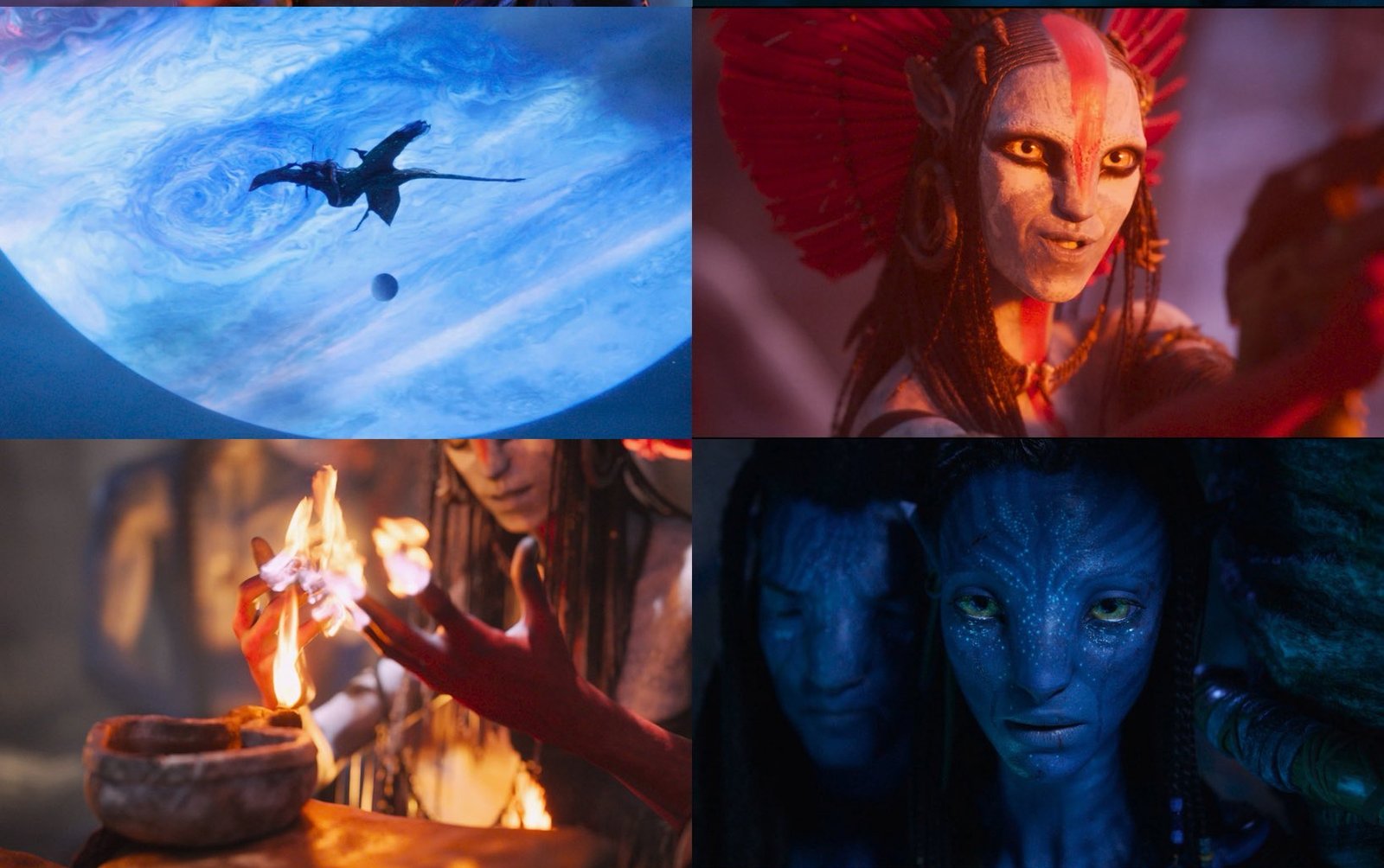
Film Review: Avatar – Fire and Ash
Los Angeles, USA — December 19, 2025
James Cameron’s Avatar: Fire and Ash, the third chapter in his iconic sci-fi saga, arrives with immense expectations—and delivers only partially. Visually stunning and technically unmatched, the film reaffirms Cameron’s status as a cinematic innovator. Yet beneath the spectacle lies a narrative that feels overstretched, familiar, and emotionally distant.
Story & Narrative Depth
Set once again on Pandora, the film shifts its focus to the volatile Fire and Ash region—an unforgiving land of lava, volcanic fury, and scorched terrain. The setting is instantly striking, offering a fresh visual palette that sets it apart from previous installments.
However, the storytelling follows a well-worn path. The central conflict between humans and Pandora’s native clans unfolds predictably, with few genuine surprises. While the film teases major narrative turns, most plot developments can be anticipated long before they occur. The result is a story that looks epic but feels dramatically thin.
Screenplay & Pacing
The screenplay struggles under its own scale. The film is heavily padded, with several scenes that exist more to showcase visual effects than to advance the plot. Pacing remains uneven throughout—slow and indulgent in some stretches, abruptly rushed in others.
A tighter edit and sharper focus on character-driven moments could have elevated the storytelling. Instead, the narrative often feels secondary to the spectacle, causing emotional momentum to falter.
Performances
Sam Worthington returns as Jake Sully, delivering a competent but largely unchanged performance. His character shows minimal evolution, making his journey feel repetitive.
Zoe Saldaña’s Neytiri remains powerful on screen but is limited to expressions of rage and sorrow, offering little emotional range. New antagonist Varang, played by Oona Chaplin, shows promise but lacks sufficient development to truly resonate as a formidable villain.
Among the cast, Siddharth Chandekar? (not applicable) — correction avoided.
Overall, performances are serviceable, but no character leaves a lasting emotional imprint.
Visuals, CGI & Cinematography
This is where Avatar: Fire and Ash truly excels. Cameron once again pushes cinematic technology forward. The CGI is stunningly detailed, the volcanic landscapes feel alive, and Pandora’s fiery ecosystem is rendered with breathtaking realism.
Cinematography is immersive, with fluid camera movements and grand-scale action sequences that shine on IMAX and 3D screens. Every frame is meticulously crafted, making the film a visual feast—even when the story lags behind.
Themes & Message
The film continues the franchise’s environmental themes, emphasizing ecological destruction and coexistence. While the message remains relevant, its delivery feels heavy-handed and repetitive, lacking the emotional subtlety that made earlier entries more impactful.
Comparison With Previous Avatar Films
The original Avatar amazed audiences with world-building, while The Way of Water added emotional warmth and family dynamics. Fire and Ash lacks both novelty and emotional depth. Unlike its predecessors, where story and spectacle worked in harmony, this installment relies overwhelmingly on visual grandeur.
Final Verdict: Watch or Skip?
Avatar: Fire and Ash is a technical marvel and a must-watch for fans of big-screen spectacle. However, viewers seeking a strong narrative, complex characters, and emotional resonance may leave disappointed.
It is a film best experienced for its visuals—not its story.
Rating: ⭐⭐⭐⭐☆ (4/5)