Parliament Set for Historic Shift: Women’s Reservation, Delimitation Bills to Be Tabled Today Amid Political Showdown
April 16, 2026 | by INVC Desk
New Delhi, India — April 16, 2026
India’s Parliament is set to witness a major legislative moment on Thursday as the central government prepares to introduce key constitutional and electoral reform bills, including those related to women’s reservation and delimitation of constituencies.
The move is expected to trigger intense political debate between the government and opposition parties during the extended session of Parliament.
Major Reform Bills to Be Introduced

The government is set to table the Constitution (131st Amendment) Bill, 2026, which proposes a significant increase in the number of seats in the Lok Sabha and state legislative assemblies.
The bill also incorporates provisions for women’s reservation, a long-debated reform aimed at increasing female representation in legislative bodies.
In addition, the government will introduce:
- Delimitation Bill, 2026
- Union Territories Laws (Amendment) Bill, 2026
These legislative measures are designed to reshape India’s electoral framework.
⚖️ Political Divide Over Delimitation
The proposed delimitation exercise has already sparked a sharp political divide. While the government is pushing forward with the reforms, opposition parties led by the Congress have expressed concerns over the implications of seat redistribution.
Concerns have been particularly strong among southern states, which fear that their parliamentary representation could decline due to better population control compared to other regions.
However, the government has rejected these concerns, stating that:
- Seat allocation will increase uniformly by 50% across all states
- No state will face a reduction in existing seats
- The maximum cap for Lok Sabha seats will be set at 850
📊 Basis of Delimitation
The government has clarified that the delimitation process will be conducted based on the 2011 Census, as it remains the last officially published census data.
Separate delimitation commissions will be formed for each state, and consultations will be held with political parties before finalizing seat distribution.
Officials argue that a fresh delimitation is necessary, as no major revision has been undertaken since 1976.
🗓️ Parliament Session Schedule
The extended Parliament session will follow a structured timeline:
- April 16: Introduction and debate on all three bills (18 hours allocated)
- April 17: Voting in Lok Sabha
- April 18: Bills to be tabled in Rajya Sabha, followed by 10-hour debate and voting
👥 Government’s Push and Political Strategy
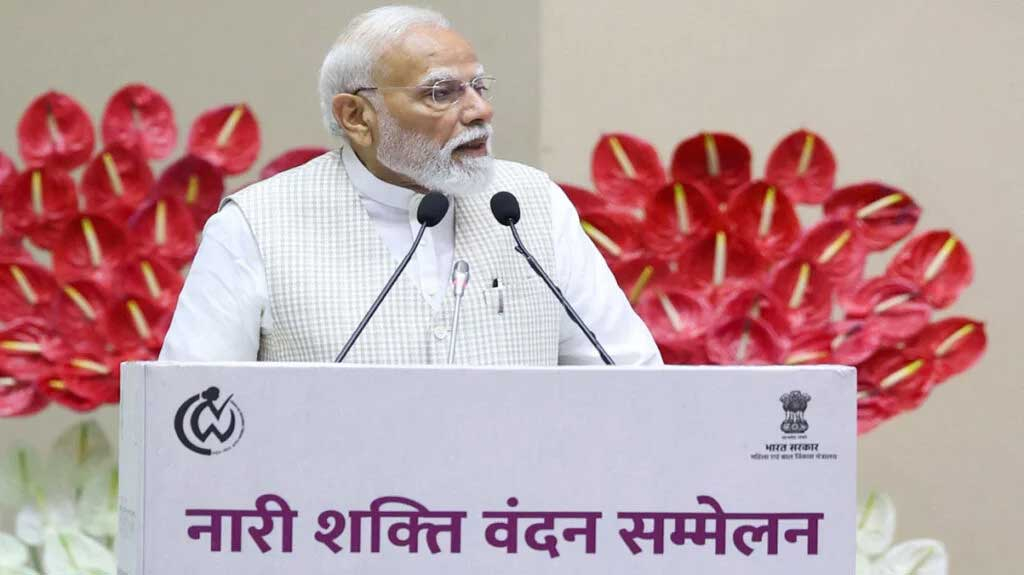
Prime Minister Narendra Modi has consistently emphasized women’s reservation as a key reform agenda, making it a central political issue.
While opposition parties are unlikely to oppose the women’s reservation component directly, they remain firm in resisting the delimitation proposal.
🌐 Why This Matters
If passed, these bills could mark one of the most significant structural changes in India’s democratic framework in decades—reshaping representation, expanding legislative bodies, and potentially altering political dynamics across states.
RELATED POSTS
View all

India’s Population Census 2027 to Begin in April 2026 With Nationwide Houselisting Drive
January 8, 2026 | by INVC Desk
Apply Online: DDA Recruitment 2025 for 1,731 Positions Across India
October 6, 2025 | by INVC Desk