
Beijing, China — March 7, 2026
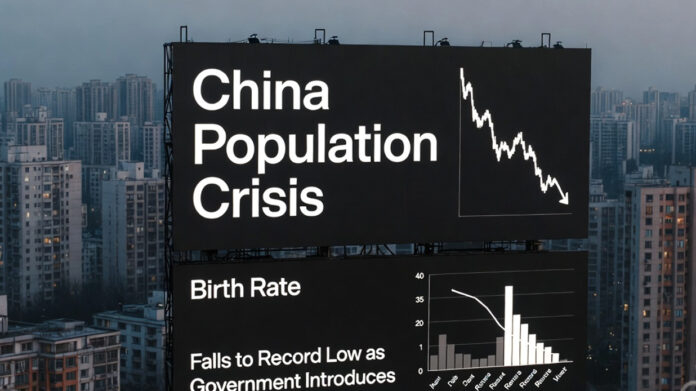
China is facing a growing demographic crisis, with the country’s birth rate falling to its lowest level since the founding of the People’s Republic of China in 1949, according to new government data.
In response, Chinese authorities have announced major incentives encouraging families to have a fourth child, signaling a significant shift in population policy as the country struggles with declining births and a rapidly aging population.
Birth Rate Drops to Historic Low
According to recent reports, China’s birth rate in 2025 fell below 6.39 births per 1,000 people, marking the lowest level recorded in the country’s modern history.
At the same time, China’s total population has declined for the third consecutive year, raising concerns about the long-term impact on the country’s workforce and economic growth.
Demographers warn that the shrinking working-age population could place increasing pressure on China’s social welfare systems and economic productivity.
Government Introduces Incentives for Fourth Child
In a major policy shift, the government has expanded beyond its previous three-child policy and is now introducing incentives aimed at encouraging families to consider having a fourth child.
Several financial and social benefits have been announced to support larger families.
Tax Breaks
Parents who have a fourth child could receive income tax reductions of up to 50% or special tax rebates, depending on regional policies.
Free Education
Authorities have also promised free education from kindergarten through university for the fourth child in eligible families.
Housing Subsidies
Large families may receive housing subsidies, low-interest home loans, and reduced down payments to make property ownership more affordable.
Cash “Baby Bonuses”
In some provinces, local governments are offering cash incentives of around 50,000 yuan (approximately $7,000 or ₹6 lakh) for families welcoming a fourth child.
Why Many Young People Are Hesitating
Despite these incentives, surveys suggest many young Chinese adults remain reluctant to have more children.
Experts point to several key factors influencing family decisions.
High Cost of Raising Children
China is considered one of the most expensive countries for raising children, with costs for education, childcare, and private tutoring placing heavy financial pressure on families.
Long Working Hours
The widely discussed “996” work culture — working from 9 a.m. to 9 p.m., six days a week — leaves many young professionals with limited time for family life.
Housing Affordability
China’s high real estate prices, especially in major cities, have also made it difficult for younger couples to consider larger families.
Growing Pressure From an Aging Population
China’s demographic challenges extend beyond falling birth rates.
Experts estimate that nearly 30% of China’s population could be over the age of 60 by 2035, dramatically increasing demand for pensions, healthcare, and social services.
This trend is often referred to as the rise of the “silver economy,” where a large elderly population places increasing financial pressure on the government and the shrinking workforce.
Policy analysts say the government’s new incentives reflect growing urgency to reverse declining birth trends and stabilize the country’s demographic structure.
However, many experts believe that addressing deeper economic and social challenges will be essential if China hopes to successfully boost its birth rate in the coming years.