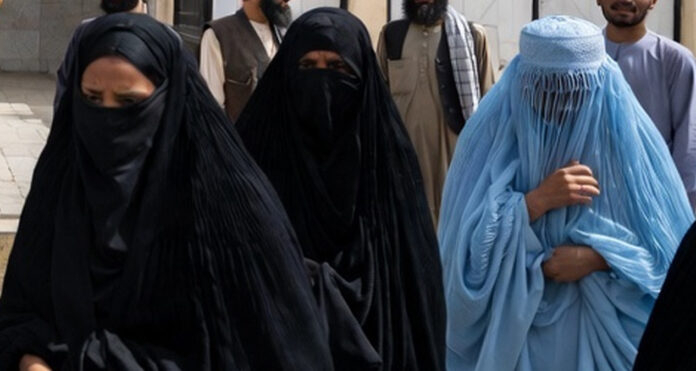
KABUL, Afghanistan — February 27, 2026
Afghanistan’s Taliban-led government has implemented a new 119-article penal code after it was signed in January by the group’s supreme leader, Hibatullah Akhundzada.
The newly enforced law has prompted strong criticism from the United Nations and international human rights organizations, which argue that several provisions may conflict with international legal standards and disproportionately affect women.
Controversial Provisions on Domestic Violence and Women’s Mobility
One of the most widely criticized provisions relates to domestic violence. Under the new code, a husband found guilty of physically assaulting his wife may face up to 15 days in prison, provided the wife can demonstrate visible injuries such as cuts, wounds, or bruises in court.
In contrast, if a woman leaves her marital home without her husband’s permission and stays with her family, she could face up to three months in prison. Family members who refuse to send her back may also face penalties.
Human rights advocates say the disparity in punishment reflects systemic gender imbalance within the legislation.
UN Officials Call Law “Contrary to International Standards”
Volker Turk, the United Nations High Commissioner for Human Rights, stated that the law appears to contradict international legal norms and formalizes discrimination against women.
Similarly, Susan Ferguson of UN Women said the new framework reinforces male authority over women, potentially making access to justice more difficult for Afghan women.
The Taliban government has not publicly responded in detail to these criticisms.
Animal Fighting Punishments and Legal Disparities
Another notable provision involves penalties for organizing animal fights, including cockfighting and other traditional contests. The new code allows for prison terms of up to five months for such activities — a longer sentence than the maximum penalty for certain domestic assault cases.
Cockfighting and similar practices have historically been common in parts of Afghanistan, though the Taliban imposed restrictions after returning to power in 2021.
The law also introduces differentiated sentencing based on social or religious status. Religious scholars and prominent individuals may receive warnings for certain offenses, while ordinary citizens could face imprisonment. Individuals from lower social groups may face corporal punishment in some cases.
However, homicide cases are excluded from these distinctions; those convicted of murder may face capital punishment. Blasphemy, including insulting the Prophet Muhammad, is also punishable by death, though the sentence may be reduced to six years in prison if the accused expresses repentance.
International Scrutiny Intensifies
The enactment of the new penal code is expected to intensify international scrutiny of Afghanistan’s legal framework and human rights record. Global organizations have indicated they will continue monitoring developments and assessing the law’s implementation.