New Delhi, India — February 21, 2026
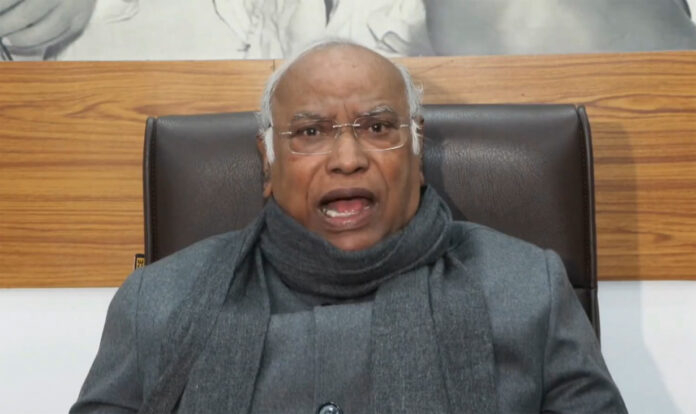
Congress president Mallikarjun Kharge on Saturday intensified criticism of the Indian government’s foreign policy, raising sharp questions about the timing of a recent trade agreement with the United States following a major American court ruling on tariffs.
Kharge asked why the government led by Prime Minister Narendra Modi finalized the deal while a case on tariffs was still pending before the Supreme Court of the United States, instead of waiting for the verdict.
Opposition Alleges Major Concessions
Kharge said it remains unclear whether India’s foreign policy reflects confusion or a one-sided tilt. He alleged that India made significant concessions in the agreement, claiming the joint statement referenced zero tariffs on several American products, potentially opening Indian markets — especially agriculture — to U.S. imports.
He also questioned reported provisions involving large-scale imports from the United States and possible tax relaxations tied to digital trade, warning such steps could affect domestic producers and small businesses.
Questions Over Strategic Autonomy
The Congress leader urged the government to clarify whether any external pressure influenced the deal, asking why national interest and strategic autonomy might have been compromised.
He said trade agreements should prioritize the welfare of India’s 1.4 billion citizens, including farmers, workers, small entrepreneurs, and traders, and must be negotiated on fair and balanced terms.
US Court Ruling Sparks Political Debate
The political controversy intensified after the U.S. Supreme Court struck down sweeping global tariffs imposed by President Donald Trump. In a 6–3 ruling, the court held that imposing import duties under emergency powers without congressional approval was unlawful.
Following the judgment, Trump expressed disappointment and said the decision ran counter to his economic agenda. He also stated that the trade agreement with India remained unchanged and would continue.
Political and Economic Implications
The development has triggered debate in India’s political circles over trade strategy, market access, and long-term economic sovereignty. Analysts say the issue could become a major talking point in domestic policy discussions, particularly as India balances global partnerships with domestic industry protection.