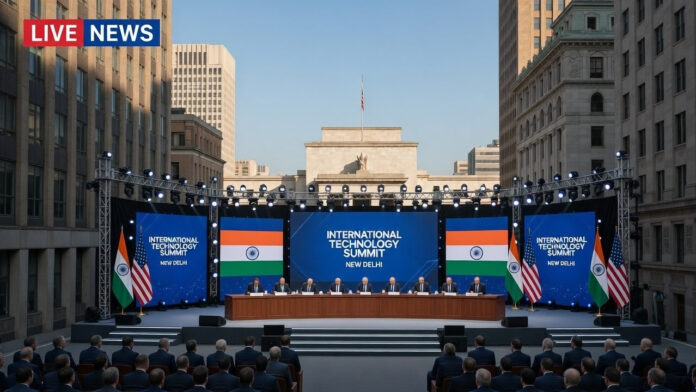
New Delhi, India — February 20, 2026
India formally joined the U.S.-led Pax Silica technology coalition on Friday, signing a strategic declaration during the India AI Impact Summit 2026 held at Bharat Mandapam. The agreement marks a significant step in expanding bilateral cooperation in artificial intelligence, semiconductor manufacturing, and critical mineral supply chains.
The pact, known as the Pax Silica Declaration, positions India among a growing group of countries collaborating to build secure and resilient technology ecosystems.
What Is Pax Silica?
Launched in December 2025 under the administration of Donald Trump, Pax Silica is a strategic initiative aimed at creating a trusted international network for advanced technology development.
The coalition focuses on three main pillars:
Critical minerals and energy resources
Semiconductor manufacturing and advanced hardware
AI infrastructure, models, and deployment
The name combines Latin pax (“stability”) and silica (a key component of silicon chips), symbolizing a stable technology framework.
Existing partners include the United States, Japan, South Korea, Singapore, the Netherlands, Israel, the United Kingdom, Australia, Qatar, and the United Arab Emirates. India’s inclusion is widely viewed as a major addition due to its large technology market and expanding manufacturing ambitions.
According to U.S. official Jacob Helberg, the initiative is intended to strengthen secure supply chains led by trusted partners rather than target any specific country.
Strategic Importance for India
Analysts say India’s participation strengthens its role in the global technology race and could accelerate domestic innovation.
Key expected benefits include:
Greater access to semiconductor and AI supply networks
Increased investment opportunities
Collaboration on advanced manufacturing technologies
Strengthened geopolitical technology alignment
India’s technology push has been highlighted repeatedly by Ashwini Vaishnaw, who has emphasized the country’s ambition to become a global semiconductor hub.
Diplomatic and Economic Context
The agreement is also seen as a reset in U.S.–India relations following recent policy disagreements over trade and energy. Participation signals closer strategic alignment between Washington and New Delhi as global competition intensifies in AI and advanced computing.
The signing took place during a summit session that included a fireside discussion featuring U.S. Ambassador Sergio Gor and other international delegates.
Protest Disruption at the Venue
The announcement coincided with a brief disruption inside the venue when members of the Indian Youth Congress staged a protest. Witnesses said several demonstrators entered the summit after registering online and displayed anti-government slogans.
Authorities confirmed that the Delhi Police detained at least four individuals and is reviewing security footage and entry data as part of an investigation.
Government leaders criticized the protest, while opposition voices defended the right to dissent. Prime Minister Narendra Modi has not publicly commented on the incident.
Broader Summit Focus
The five-day global summit centered on the theme “Responsible Intelligence,” highlighting ethical AI development, inclusive growth, and sustainable technology deployment. Organizers said exhibitors from more than 30 countries participated alongside major technology companies.