New Delhi, India | February 10, 2026
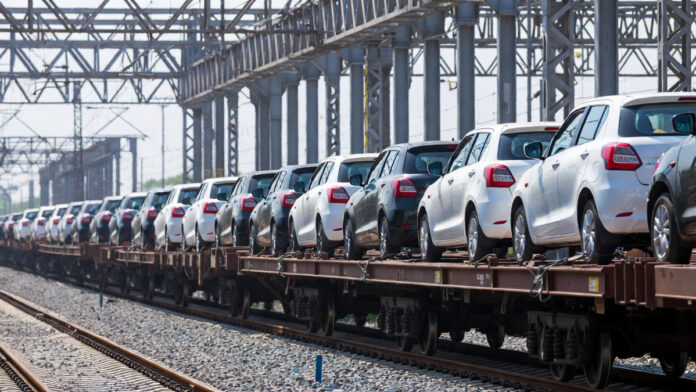
India’s largest passenger vehicle maker, Maruti Suzuki India, has achieved a major milestone in sustainable logistics by transporting more than 5.85 lakh vehicles through railways in 2025, marking its highest-ever rail dispatch in a single year.
The figure represents an 18% increase compared to 2024, highlighting the company’s growing reliance on rail-based transportation for vehicle distribution across the country.
Rail Share in Maruti’s Logistics Hits 26%
Maruti Suzuki said the share of rail transport in its overall vehicle dispatch has risen sharply over the years. From just 5.1% in 2016, rail transport now accounts for 26% of the company’s total vehicle deliveries in 2025.
The company attributed this shift to improved railway infrastructure, dedicated automobile freight corridors, and its long-term focus on sustainable and efficient logistics.
Environmental and Economic Benefits
According to Maruti Suzuki, the increased use of railways has delivered multiple benefits:
Significant reduction in carbon emissions
Lower dependence on crude oil imports
Reduced traffic congestion on highways
Improved fuel efficiency in vehicle transportation
Rail transport is considered far more energy-efficient than road transport, especially for bulk movement of automobiles over long distances.
Supporting Green Mobility Goals
Industry experts say Maruti Suzuki’s logistics strategy aligns closely with India’s broader goals of reducing emissions and promoting greener transportation systems. By shifting a large portion of vehicle dispatch from road to rail, the company has helped ease pressure on highways while supporting cleaner supply chains.
Officials noted that collaboration with Indian Railways has played a key role in scaling up automobile transportation through specialized car carrier trains.
What This Means for the Auto Industry
Maruti Suzuki’s record rail dispatch is being seen as a benchmark for the Indian automobile sector. Analysts believe more automakers may increasingly adopt rail logistics as railway infrastructure and dedicated freight services continue to expand.
The move is also expected to contribute to faster deliveries, lower logistics costs over time, and a more sustainable auto ecosystem.