Washington / Beijing | December 18, 2025
The US–China trade war intensified sharply in 2025 under President Donald Trump’s second term, reaching levels unseen since the 1930s before easing into a fragile truce that now runs through November 2026.
The renewed conflict built on the 2018–2020 trade war, with the Trump administration invoking national emergency powers—including concerns over fentanyl flows, trade deficits, and national security—to justify sweeping tariffs under laws such as the International Emergency Economic Powers Act (IEEPA).
Early Escalation: January–March 2025
The standoff began in January when Washington imposed a 10% tariff on all Chinese imports, effective February 4, citing fentanyl-linked supply chains. By March, the rate doubled to 20%, triggering swift retaliation from Beijing.
China responded with 10–15% tariffs on US agricultural exports, including soybeans, pork, chicken, and corn, while also deploying non-tariff measures such as export controls on rare earths and adding US firms to regulatory watchlists.
Peak Intensity: April–May 2025
Tensions peaked in spring as the US rolled out so-called “reciprocal tariffs”, pushing average duties on Chinese goods above 100–127%, with some categories reportedly touching 145%.
China countered aggressively, slapping 84–147% tariffs on nearly all US exports and launching investigations into American companies. Global markets reeled as supply chains froze and trade volumes plunged.
De-escalation and Trump–Xi Truce
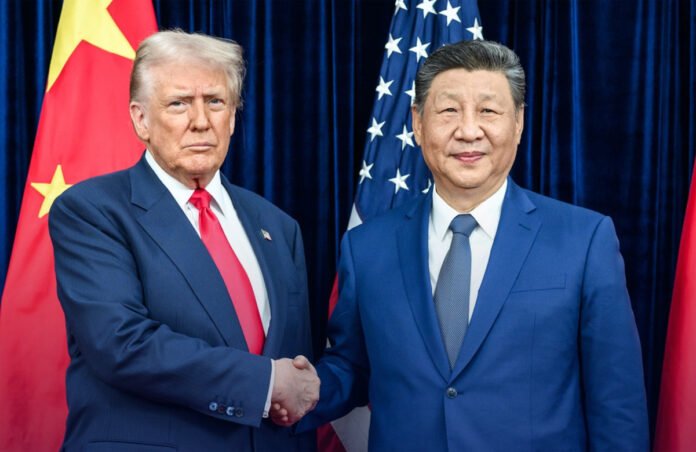
After months of economic strain, diplomacy resumed. A series of high-level talks culminated in a Trump–Xi Jinping meeting in South Korea on October 30, paving the way for a one-year trade truce announced in November.
Effective November 10, 2025:
The US cut fentanyl-related tariffs by 10 percentage points, lowering many new duties to 10–20%
Elevated reciprocal tariffs were suspended
China halted all retaliatory tariffs imposed since March and withdrew non-tariff measures
Beijing agreed to tighten controls on fentanyl precursors and resume large-scale US soybean purchases
Washington extended Section 301 tariff exclusions through November 2026 and eased select export controls
Current Tariff Levels (December 2025)
Despite the truce, tariffs remain historically high:
US on China: Effective rates often exceed 30%, combining legacy duties from 2018–2020 with reduced 2025 tariffs
China on US: Retaliatory additions suspended, with average rates between 21–32%
Hundreds of product exclusions remain valid until 2026
A notable sign of thawing ties came with US approval allowing Nvidia to resume sales of advanced H200 AI chips to China.
Economic and Global Impact
The trade war reshaped global commerce:
The US collected over $200 billion in tariff revenue in 2025, effectively raising household costs by an estimated $1,200 per family
US imports from China fell sharply, in some periods by 18–53%
China offset losses by redirecting exports to Europe, ASEAN, and Africa, helping generate a record trade surplus
Supply chains accelerated diversification, while China expanded its lead in EVs, clean energy, and robotics
Economists warn the truce remains fragile, with unresolved disputes over technology restrictions, rare earths, and national security posing risks for renewed escalation in 2026.
For now, the US–China trade war has shifted from confrontation to cautious containment, offering temporary relief to global markets after one of the most volatile trade years in modern history.