Washington, D.C., United States , December 16, 2025 :
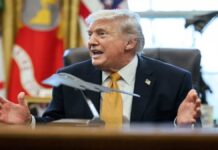
US President Donald Trump has filed a $10 billion defamation lawsuit against British public broadcaster BBC, accusing it of deliberately editing his January 6, 2021 speech to falsely portray him as inciting violence and to influence the 2024 US presidential election.
The 33-page lawsuit, filed in a Florida court, alleges that the BBC engaged in defamation, misleading reporting, and unfair trade practices by broadcasting a “false, defamatory, inflammatory, and malicious portrayal” of Trump. According to the filing, the broadcaster intentionally spliced together two entirely separate portions of Trump’s January 6 speech to distort its meaning.
Trump claims the BBC combined remarks delivered nearly an hour apart to make it appear that he urged supporters to march with him and “fight fiercely,” while omitting his explicit call for peaceful protest. The edited footage was aired as part of a one-hour documentary titled “Trump: A Second Chance?”, broadcast just days before the 2024 US presidential election.
The speech in question was delivered as Trump supporters stormed the US Capitol, while Congress was certifying the 2020 presidential election results, which Trump has repeatedly claimed were fraudulent. Joe Biden was officially declared the winner of that election.
Following threats of legal action, the BBC issued an apology last month for what it described as “editing errors” in the January 6 speech. However, the broadcaster rejected accusations of defamation. BBC Chairman Samir Shah acknowledged a “serious editorial judgment failure,” a controversy that ultimately led to the resignation of the BBC’s top executive and head of news.
Speaking from the White House on Monday without taking questions, Trump said the broadcaster had “put words in my mouth that I never said and removed the good words I did say.” He accused the BBC of deliberately misrepresenting his remarks to damage his reputation and mislead voters.
Legal experts note that the lawsuit faces significant jurisdictional challenges, as the documentary was not broadcast in the United States, and the deadline for filing a defamation case in UK courts expired more than a year ago. Despite this, Trump has proceeded with the case in Florida, arguing that the reputational harm extended into the US political landscape.
The case is expected to draw intense international attention, raising renewed debate over media accountability, election interference, and editorial ethics in politically sensitive reporting.