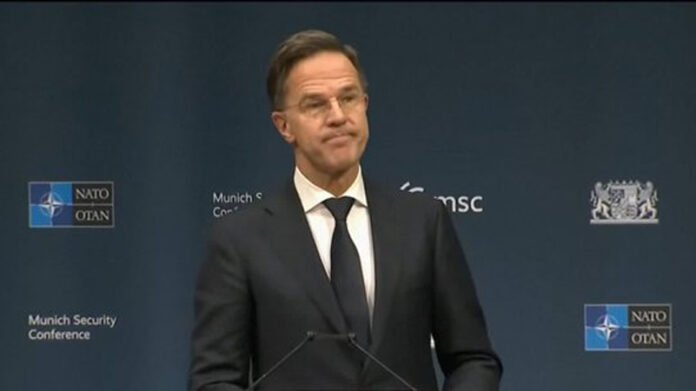
Berlin / Brussels, : The NATO Secretary General Mark Rutte issued one of the alliance’s strongest security warnings in decades, cautioning that Russia could mount an attack on NATO territory within five years, potentially on a scale comparable to World War II. Speaking at a Berlin security conference, Rutte urged all 32 NATO member states to accelerate defense spending and immediately meet the 2% of GDP benchmark.
“Complacency could cost us everything,” Rutte declared, emphasizing that Moscow’s expanding military operations in eastern Ukraine signal an increasingly aggressive strategic posture.
The warning comes as Russian forces intensify their push across the Donbas, having captured 1,200 square kilometers since September. On December 10, an Iskander missile strike in Dnipro killed four civilians and injured 40, destroying residential buildings, vehicles, and critical infrastructure. The attack is part of Russia’s broader winter offensive aimed at overwhelming Ukrainian defenses.
Ukrainian President Volodymyr Zelenskyy presented a revised 20-point peace proposal to U.S. negotiators on December 11, demanding ironclad security guarantees, long-term defense pacts, and $500 billion in reconstruction funding. The proposal—discussed urgently with leaders from 30 nations—includes phased Russian troop withdrawals and sanctions relief but faces resistance from Moscow.
Economically, the prolonged conflict has pushed global energy prices up 15% this year, raising the specter of European winter blackouts if Russian gas flows cease entirely. EU officials warn the situation could become the bloc’s most severe energy crisis in decades.
Rutte’s remarks also echo a secret Pentagon report leaked on December 10, which warned that China could defeat U.S. forces in a Taiwan conflict within weeks, sparking renewed calls for a unified Western deterrence strategy.
In response to the rising threat environment:
-
Germany pledged €100 billion in rapid military modernization, including air-defense systems and armored vehicles.
-
France’s President Emmanuel Macron urged caution, warning that over-militarization could provoke further escalation.
-
Hungary’s Viktor Orbán continues to block EU-NATO aid packages for Ukraine, exposing fractures within the Western coalition.
With the war now entering its fourth year and estimated casualties surpassing 500,000, analysts warn that delayed decision-making could prolong the conflict and embolden adversaries.
NATO members will convene multiple emergency summits in early 2026 to outline a joint strategy, as concerns mount over whether the alliance is adequately prepared for simultaneous crises in Europe and the Indo-Pacific.