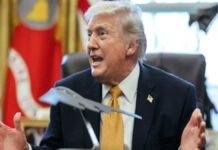
Washington, D.C., : The U.S. President Donald Trump has signed a sweeping Executive Order establishing the nation’s first unified federal framework for artificial intelligence regulation, overriding what the White House described as “fragmented and contradictory” state-level rules. The move marks one of the most significant U.S. policy interventions in emerging technology—and places Washington in a more direct race with Beijing for global AI leadership.
Drafted by White House AI Czar David Sacks and Commerce Secretary Howard Lutnick, the order mandates federal oversight through a newly formed AI Safety Board, which will require AI developers—including OpenAI, Google, Meta, Anthropic, and others—to report “high-risk” deployments within 30 days of implementation.
Among its most controversial provisions, the order bans state-level prohibitions on facial recognition, standardizes national compliance rules, and authorizes fines of up to $1 million for violations. Federal officials argue the unified system is necessary to compete with China’s rapid advances, following the release of Chinese firm DeepSeek’s next-generation AI models on December 2.
During a Rose Garden ceremony, Trump celebrated the order as a catalyst for American innovation, declaring:
“We are unleashing American genius—and we will lead the world in AI.”
Tech leaders Elon Musk and Sam Altman attended the signing, symbolizing Silicon Valley’s direct involvement in shaping the policy.
However, the order has ignited significant debate. California Governor Gavin Newsom condemned the framework as “corporate capture,” warning it could weaken privacy protections by superseding stricter state laws. Civil liberties groups echoed concerns about expanded facial recognition use and reduced local oversight.
The framework also draws global attention.
EU officials warned it may trigger a “regulatory race to the bottom”, undermining international data and safety standards.
India welcomed aspects of the policy, noting its alignment with India’s proposal to institute AI royalties for creators, part of its 2025 AI governance roadmap.
Meanwhile, advocates for workforce development applauded the administration’s plan to allocate $500 million for AI training programs, vital as 3.6 million Indians and millions of Americans enroll in GenAI courses globally, per Coursera.
Economists say the order positions the U.S. more aggressively in the race for the $1 trillion global AI market, while simultaneously strengthening Washington’s posture in the broader geopolitical tech rivalry with China.
Implementation begins January 2026, with federal agencies required to submit updated AI risk, compliance, and audit frameworks by mid-year.