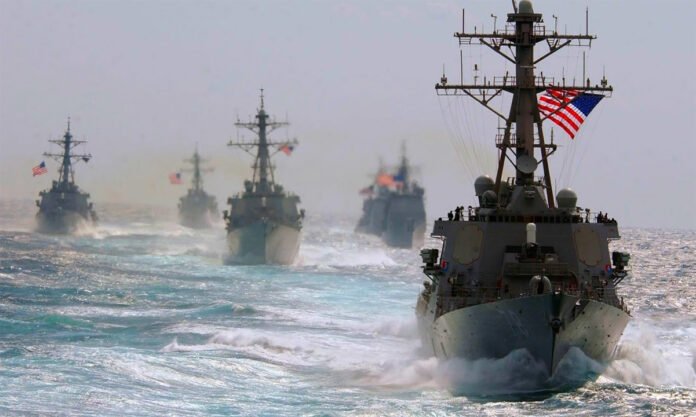
Washington / Caracas, : Tensions in the Caribbean have escalated sharply as the United States has deployed nearly 30% of its naval fleet, including aircraft carriers, destroyers, and support vessels, off the coast of Venezuela. The unprecedented show of force, ordered by President Donald Trump, follows Venezuelan President Nicolás Maduro’s defiant warning that he would “break America’s teeth” and his outreach to Russia for military reinforcement.
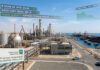
U.S. officials say the fleet is poised for rapid action, with Trump reportedly considering the seizure of additional Venezuelan oil tankers to further weaken Maduro’s embattled regime. A series of earlier U.S. interceptions significantly disrupted Venezuela’s already fragile oil exports, prompting Maduro to accuse Washington of orchestrating a coup attempt.
Military activity has intensified across the region. U.S. fighter jets and EA-18G Growler electronic warfare aircraft have been spotted conducting patrols over the Caribbean, signaling readiness for potential intervention. Satellite imagery confirms the proximity of the American armada, underscoring the gravity of the standoff despite no shots being fired.
Maduro, facing severe domestic unrest, international isolation, and accusations of human rights abuses, has doubled down on his anti-U.S. rhetoric. Meanwhile, exiled opposition leader María Corina Machado, fresh off being awarded the 2025 Nobel Peace Prize, urged the international community to increase pressure on Maduro. Her daughter accepted the prize in Oslo, emphasizing Machado’s continued exile and security concerns.
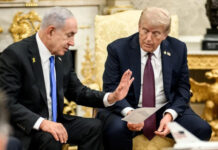
The crisis unfolds as Trump addresses Congress in a message calling for unity at the annual Congressional Ball. “Tonight, we’re going to set aside all political differences and love each other,” he said—though his foreign policy actions suggested a firm and assertive strategic posture abroad.
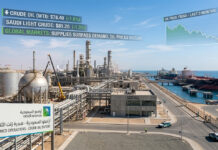
Analysts warn the confrontation could destabilize the wider region, potentially pulling in Colombia, where Trump has expressed interest in intensified operations against drug cartels. Economically, the standoff threatens global energy markets, with experts forecasting a 5–10% spike in oil prices if tanker seizures increase.
The U.S. State Department maintains that Washington’s goal is to support democratic transitions in Latin America. However, critics caution that the buildup risks drawing parallels to past U.S. interventions, including Iraq, raising concerns about open conflict in the hemisphere.
For now, the Caribbean remains calm but tense—an uneasy pause as both sides brace for what could become one of the most consequential geopolitical flashpoints of 2025.