New Delhi, December 8, 2025 :
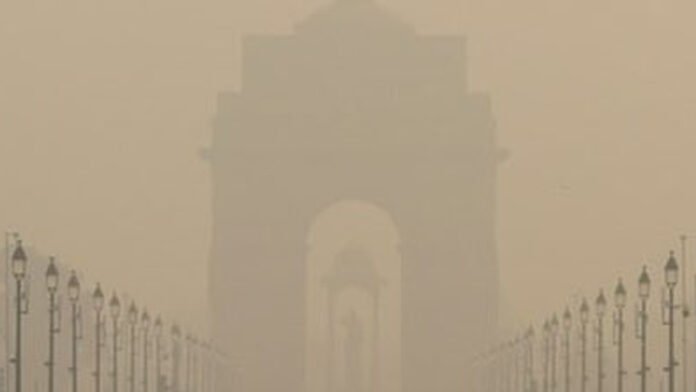
Delhi’s relentless battle against toxic air has reached the courts once again, with the Municipal Corporation of Delhi (MCD) submitting a comprehensive status report to the National Green Tribunal (NGT) on efforts to combat the capital’s deteriorating air quality. Despite a slew of interventions—from mechanical road sweeping to dust control at construction sites—the measures appear ineffective, as the Air Quality Index (AQI) climbed from 177 to 212, entering the “poor” category and posing severe health risks, especially to children and the elderly.
The NGT took suo motu cognizance of a recent media report highlighting the AQI spike, which triggers respiratory issues, asthma exacerbations, and long-term cardiovascular threats. MCD’s affidavit, filed by Executive Engineer Manish Jain, details actions from January to November 2025, emphasizing phased crackdowns under the Graded Response Action Plan (GRAP).
Key highlights include deploying 52 Mechanical Road Sweepers (MRS) with 4.5-6.5 cubic meter capacities, covering 3,000 km of 12-foot-wide roads daily—focusing 1,700 km on PWD main roads. In hotspots, each machine targets 30-35 km, with operations extended from 8 to 10-12 hours during GRAP stages. GPS-enabled for real-time tracking, these sweepers collect 150 metric tons of dust daily, disposed at designated sites. Under the National Clean Air Programme (NCAP), 14 new machines are funded, plus 4 from Urban Development Fund (UDF), totaling 18 additions.
Water sprinkling efforts involve 167 sprinklers and jetting machines, alongside 28 Mobile Anti-Smog Guns (ASGs), wetting 2,000 km of roads daily. GRAP escalates ASG deployment in hotspots, with 200 more from PWD in MCD areas—all GPS-tracked. Manual cleaning mobilizes 57,500 workers across 6,130 km, while 356 teams with 1,385 officers monitor open garbage burning. From January to November 15, 625 challans worth Rs 5.8 lakh were issued for burning, and 2,233 challans totaling Rs 3.53 crore (Rs 19.15 lakh recovered) for construction & demolition (C&D) waste dumping.
To curb construction dust, 824 sites are registered on the Delhi Pollution Control Committee (DPCC) portal, inspected by 131 teams (531 personnel) in two shifts. The Building Department issued 2,233 challans, enforcing 14 dust mitigation measures. Operational 106 C&D collection points (59 with 12-foot blue sheets) aim to expand to 250 soon.
Greening initiatives saw the Horticulture Department plant 3.66 lakh saplings and shrubs from April to October across 13 hotspots like Narela, Bawana, Mundka, and Wazirpur, overseen by Zonal Deputy Commissioners as nodal officers. Supporting eco-friendly mobility, 419 EV charging stations are now operational. Infrastructure upgrades filled 14,176 potholes and re-surfaced 297 km of roads during April-October. Parking solutions include 30 multi-level facilities (10,751 cars, 1,039 two-wheelers), with 4 more proposed.