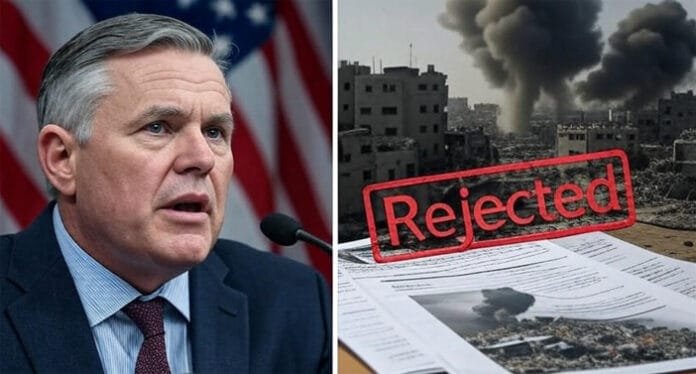
Moscow, December 6, 2025 — A high-stakes diplomatic mission led by U.S. envoys Steve Witkoff and Jared Kushner has failed to deliver progress on a proposed Ukraine peace framework, after Russian President Vladimir Putin rejected key elements of Washington’s plan during two days of talks in Moscow.
Sources familiar with the closed-door discussions said Putin dismissed the U.S. demand for Russian withdrawal from Donbas as “unacceptable,” signaling Moscow’s intent to pursue full territorial control of the region.
President Donald Trump, speaking to reporters afterward, conceded that the U.S. has “unclear next steps,” raising doubts about whether the administration has a viable path forward to end the nearly four-year conflict.
U.S. Plan: Freeze the Frontlines, Pause NATO Expansion — But No Deal
The American proposal centered on:
Freezing current frontlines in Ukraine
A temporary pause on Ukraine’s NATO accession efforts
Security guarantees tied to future demilitarization zones
An eventual internationally monitored referendum in contested regions
Putin reportedly rejected every component tied to territorial rollback, insisting Russia reserves the right to seize the remainder of Donbas “by force if needed.”
Ukrainian President Volodymyr Zelenskyy accused Moscow of “performative diplomacy” and “deliberate stalling,” saying the Kremlin had no intention of engaging in a meaningful peace process.
Context: Putin Bolstered After India Visit
The failed talks come just days after Putin’s high-profile visit to India, where he secured expanded crude oil and LNG deals at discounted rates — a move widely seen as defying U.S. secondary sanctions.
Analysts say the agreements provide Russia with crucial economic cushioning as the war drags on, reducing the leverage Washington hoped to wield during negotiations.
Europe Escalates Pressure: GRU Sanctions Over Salisbury Attack
As diplomacy faltered in Moscow, the European Union announced new sanctions on operatives linked to Russia’s military intelligence agency, the GRU, over its role in the 2018 Salisbury Novichok poisoning of Sergei and Yulia Skripal.
EU officials said the timing was deliberate, aimed at signaling that Moscow’s “destabilizing activities” remain under strict scrutiny even amid peace discussions.
Global Reverberations: Somalia, Lebanon, and Afghanistan in Turmoil
Beyond Europe, the geopolitical ripple effects were immediate:
Somalia issued a formal diplomatic protest after President Trump made disparaging comments about Somali immigrants during a domestic policy speech.
In Lebanon, over 300 people have died in renewed clashes despite a fragile ceasefire, raising fears of a wider regional spillover.
In Afghanistan, the Taliban carried out a public execution in a Kabul stadium, drawing sharp condemnation from human rights groups and underscoring the country’s deteriorating security situation.
U.S. Domestic Actions Add Economic Strain
The Trump administration also moved ahead with multiple domestic policy shifts:
H-1B visa restrictions targeting major tech employers, a move industry leaders warn will intensify the existing talent shortage.
A sweeping 107% tariff on Italian pasta imports, introduced as part of a broader trade realignment agenda aimed at protecting U.S. manufacturers. Economists caution the policy could fuel price spikes heading into 2026.
A Diplomatic Setback With Global Consequences
The collapse of the Moscow talks marks one of the most significant foreign-policy setbacks for Trump’s second term, raising doubts about the administration’s ability to negotiate an end to Europe’s deadliest conflict since World War II.
With Russia doubling down on military aims and Ukraine demanding full territorial restoration, the gap between both sides has rarely looked wider.