Washington, D.C. | December 6, 2025 :
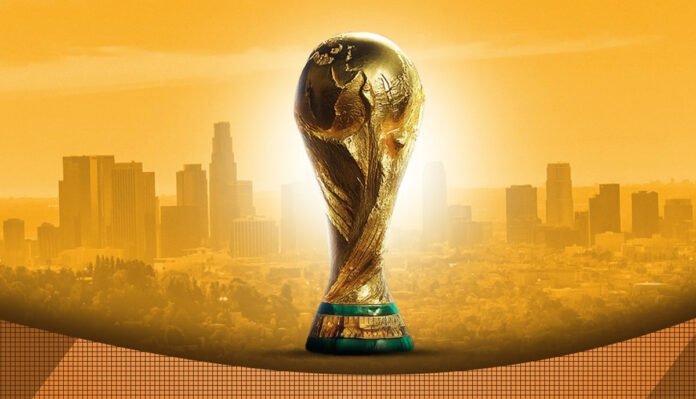
The 2026 FIFA World Cup draw unfolded on December 5 at Washington’s prestigious Kennedy Center, officially launching the first-ever 48-team edition of the tournament co-hosted by the United States, Canada, and Mexico. The expanded format—featuring 12 groups of four—symbolizes FIFA’s most ambitious overhaul in modern football history, promising wider global representation and record-breaking viewership.
Defending champions Argentina, led by superstar Lionel Messi, landed in Group A alongside Algeria, setting up an early high-voltage matchup. Hosts Team USA were drawn into Group D with Ecuador, Senegal, and a playoff qualifier, a grouping analysts say could produce some of the tournament’s closest contests. France, spearheaded by Kylian Mbappé, will face Morocco, Peru, and New Zealand in a group expected to showcase diverse playing styles and fierce competition.
The ceremony drew worldwide attention—not only for the sporting drama but also for its political backdrop. FIFA President Gianni Infantino was joined by U.S. President Donald Trump, who surprised attendees by receiving FIFA’s inaugural Peace Prize for what the organization described as his “efforts in global diplomacy.” The moment sparked mixed reactions, with crowds outside the venue protesting FIFA’s decision to include Israel amid ongoing Middle East tensions.
Mexican President Claudia Sheinbaum also attended, marking her first formal meeting with President Trump. Inside the hall, the two-hour event highlighted new tournament logistics, including an expanded knockout stage and 104 total matches scheduled across 16 cities from June 11 to July 19, 2026. The iconic Estadio Azteca in Mexico City will host the opening match, cementing its legacy as the first stadium to open three World Cups.
Despite excitement, critics warn of logistical challenges as teams and fans navigate long-distance travel across three nations. Yet optimism runs high as underdogs like Haiti and South Korea target breakthrough performances. FIFA expects global viewership to exceed five billion, buoyed by stronger representation from African and Asian nations and a surge of rising talent poised to reshape football’s global hierarchy.
With a prize pool estimated at $500 million and political tensions simmering in the background, the 2026 World Cup is shaping up to be not only the largest but also one of the most geopolitically charged tournaments in football history.