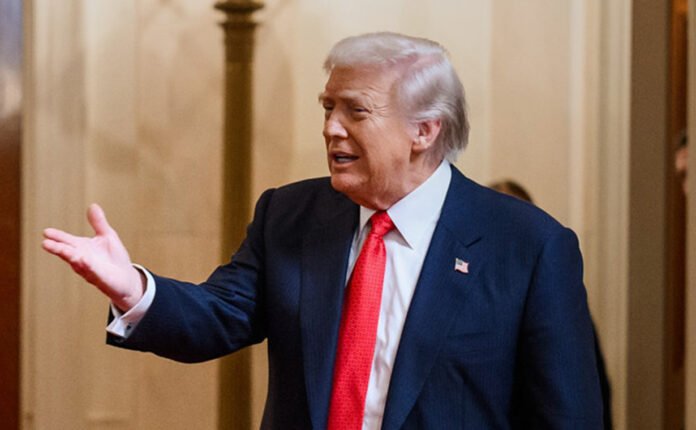
Washington, D.C., November 29, 2025:
In a highly charged post-Thanksgiving address, US President Donald Trump unveiled a sweeping executive order indefinitely banning immigration from 15 so-called “Third World countries”, citing national security concerns after the fatal shooting of two National Guard members near the US Capitol.
The sweeping directive—one of the most far-reaching migration restrictions in modern US history—immediately ignited diplomatic uproar, domestic protests, and warnings of humanitarian fallout.
The Attack That Triggered the Ban
The order followed Thursday’s killing of Sergeant Maria Gonzalez (34) and Corporal Jamal Hayes (29), who were shot near the Capitol Reflecting Pool by Rahmanullah Lakanwal, a 29-year-old Afghan national and former counterterrorism operative who overstayed his visa after entering the US in 2022 under a Special Immigrant Visa (SIV) for Afghan allies.
Lakanwal fired upon officers using a smuggled AK-47, leaving both Guard members dead before being shot and killed by Secret Service agents. The FBI has not linked the attacker to any terror organization, though a manifesto cited “persecution fears.”
Trump’s Executive Order
Standing beside Homeland Security Secretary Kristi Noem, Trump declared:
“This tragedy proves we cannot accept more chaos from failed nations. Immigration from countries like Afghanistan, Somalia, and Venezuela ends now—effective immediately.”
The order invokes Section 212(f) of the Immigration and Nationality Act, the same authority used for Trump’s earlier travel bans. It halts visa processing for 1.2 million annual applicants, leaving more than 300,000 individuals stranded in bureaucratic limbo.
The list reportedly includes nations across South Asia, Africa, Latin America, and the Middle East.
Global and Domestic Blowback
The move sparked swift international condemnation:
Amnesty International blasted the order as “xenophobic scapegoating.”
UNHCR Chief Filippo Grandi warned it could trigger widespread humanitarian crises.
Mexico’s President Claudia Sheinbaum threatened retaliatory tariffs on US exports.
EU foreign policy chief Josep Borrell condemned the directive as a “breach of international norms.”
At home, Senate Minority Leader Chuck Schumer labeled it “unconstitutional fearmongering,” promising immediate legal challenges.
Economic and Political Implications
Economists warn the ban could worsen existing labor shortages in agriculture, construction, and tech—sectors heavily reliant on migrant workers—potentially costing the US $100 billion annually.
The announcement also comes as US border encounters hit a record 2.5 million in 2025, bolstering Trump’s promise to restore “law and order” ahead of the 2026 midterm elections.
Protests Erupt Nationwide
Within hours, demonstrations erupted across major cities:
5,000 protesters gathered in New York
Large crowds assembled in Los Angeles, Chicago, and Seattle
Civil liberties groups began coordinating multi-state lawsuits
Chants of “No ban, no wall!” filled the streets as activists accused the administration of exploiting a tragedy for political gain.
A New Phase of America First
The policy marks a dramatic escalation of Trump’s long-running hardline immigration agenda, reviving comparisons to his first-term travel bans while threatening to deepen US diplomatic isolation.
Officials anticipate weeks of legal, diplomatic, and political turbulence as the global community responds to Washington’s most sweeping immigration order in decades.