Geneva | November 28, 2025:
As deadly Russian missile strikes tore through Kyiv on November 27, killing seven civilians and injuring 20, Moscow signaled renewed resistance to a revised U.S.-brokered peace plan aimed at ending the nearly four-year-long Ukraine war. The attacks, which hit residential blocks and a maternity hospital, were condemned by Ukrainian President Volodymyr Zelenskyy as a “barbaric escalation” timed to undermine ongoing negotiations in Geneva.
The new 28-point U.S. proposal, unveiled by President Donald Trump on November 25, includes adjustments requested by Ukraine, such as capping military personnel at 800,000 instead of 900,000 and freezing $100 billion in Russian assets for postwar reconstruction. While Washington dropped earlier demands ruling out future NATO membership, the plan still mandates long-term neutrality, a condition Kyiv has repeatedly criticized.
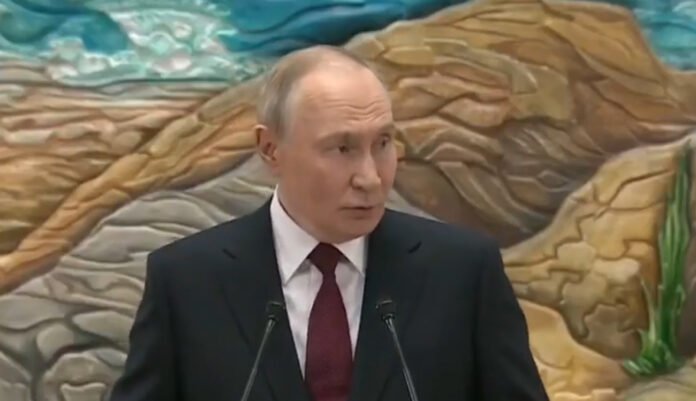
U.S. Special Envoy Steve Witkoff recently met President Vladimir Putin in Moscow, while U.S. Army Secretary Daniel Driscoll continues coordinated discussions with Zelenskyy’s delegation in Geneva. Despite diplomatic movement, a Kremlin insider told The Washington Post that Russia views the plan as “pro-Russian but insufficient,” rejecting any demilitarization terms that do not include regime change in Kyiv.
European leaders have expressed deep concern. NATO Secretary General Jens Stoltenberg warned that any concessions favorable to Moscow could result in “catastrophic” security consequences for Europe. The crisis unfolds against a backdrop of broader regional instability, including 38 Pakistani Taliban raids reported this month.
Ukraine states that 1,200 civilians have been killed so far in 2025, while the European Union has pledged €50 billion in long-term assistance to support Kyiv’s war effort and reconstruction plans.
As of 10:00 AM GMT on November 28, Trump is proposing a potential Zelenskyy visit to Washington, though Putin’s hardened stance suggests the conflict may grind on. Analysts warn the prolonged uncertainty has already dragged global markets down by 1.5%, adding economic pressure to the escalating geopolitical struggle.