New Delhi, 2 November 2025 —
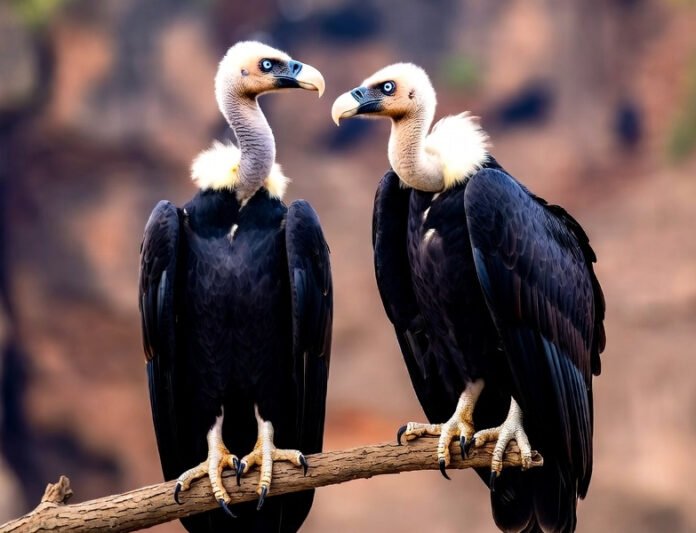
India’s first comprehensive National Vulture Survey (NVS-2025) has revealed an alarming 70% decline in active nesting sites of vultures across major habitats, sparking nationwide concern among environmentalists and forest officials. The report, jointly released by the Ministry of Environment, Forest and Climate Change (MoEFCC) and the Bombay Natural History Society (BNHS), highlights how the population of the once-abundant scavenger birds continues to struggle despite a two-decade-old conservation campaign.
The findings, compiled over 18 months using drone imaging, satellite telemetry, and on-ground data from 21 states, show that only 312 active nesting colonies were recorded nationwide — compared to more than 1,050 documented in the early 2000s.
Populations Declining Despite Diclofenac Ban
The vulture crisis first caught national attention in the late 1990s when the population of Gyps species — including the Oriental White-backed, Long-billed, and Slender-billed vultures — began collapsing due to diclofenac poisoning, a veterinary anti-inflammatory drug deadly to vultures feeding on cattle carcasses.
Despite India’s 2006 ban on veterinary diclofenac and follow-up regulations in 2015, illegal use of toxic NSAIDs such as ketoprofen and aceclofenac continues in rural areas, undermining conservation gains.
According to Dr. Vibhu Prakash, Principal Scientist at BNHS, “The vulture population has shown localized recovery in Rajasthan and Madhya Pradesh, but the broader ecological balance remains fragile. The persistence of banned drugs and habitat loss are major roadblocks.”
Major States Affected
The report identifies Uttar Pradesh, Jharkhand, West Bengal, and Odisha as regions with the sharpest decline in nesting activity — with over 80% loss of natural roosting trees due to urbanization, quarrying, and deforestation.
In contrast, parts of Gujarat’s Gir landscape and Assam’s Kaziranga region have reported modest improvements, thanks to localized breeding programs and stricter carcass disposal monitoring.
Habitat Fragmentation and Food Scarcity
The study also notes that habitat fragmentation and decreased availability of safe carrion have compounded the crisis. With mechanized carcass disposal and sanitation drives expanding in rural India, vultures face growing food insecurity.
“The ecological role of vultures as nature’s clean-up crew cannot be overstated,” said Ramesh Singh, Director of Wildlife Trust of India (WTI). “Without them, carcass decomposition slows, increasing the risk of zoonotic diseases — a lesson the world learned during India’s vulture crash of the 1990s.”
Government’s Next Steps
Responding to the survey, Environment Minister Bhupender Yadav announced a renewed “National Vulture Recovery Mission 2025–2030”, aiming to restore at least 500 safe nesting sites across the country within five years. The plan includes:
Establishing 10 new Vulture Conservation and Breeding Centres (VCBCs) in high-risk zones
Tightening enforcement on veterinary drug sales
Expanding safe food zones within protected forest corridors
Integrating vulture monitoring into State Biodiversity Action Plans
Global Context and IUCN Concern
Globally, vultures are among the most threatened bird groups. According to the International Union for Conservation of Nature (IUCN), 16 of the world’s 23 vulture species are threatened with extinction. India hosts nine of these species, with four listed as Critically Endangered.
The NVS-2025 findings are expected to feed into the South Asian Vulture Recovery Plan, coordinated with Nepal, Bangladesh, and Pakistan, where similar population declines have been reported.
Experts Warn of Ecological Ripple Effects
Ecologists warn that unchecked decline could lead to cascading impacts on India’s ecosystem health. “When vultures disappear, stray dogs and rats fill the vacuum — escalating rabies and sanitation challenges,” explained Dr. M. Rajkumar, an ecotoxicologist from the Indian Institute of Science (IISc).
He added that long-term solutions depend on a “multi-agency framework linking veterinary regulation, wildlife protection, and rural awareness campaigns.”
Public Awareness and Citizen Science Push
The report calls for greater citizen participation through smartphone-based wildlife monitoring apps and community-led carcass management programs. Environmental NGOs have begun pilot campaigns in Rajasthan and Maharashtra encouraging farmers to report sightings of nesting vultures via the eBird India platform.
Conclusion
The National Vulture Survey 2025 stands as both a milestone and a warning. While it represents India’s most sophisticated attempt to understand the crisis, its results underline the urgency for stronger policy action, enforcement, and community involvement.
As India looks toward Vulture Conservation Day 2026, the message is clear — the survival of these sky guardians will depend on sustained vigilance and collective responsibility.