Washington / Tehran — February 20, 2026
Global tensions are rising fast. The US has deployed powerful carrier groups near Iran, while Tehran signals it could block a key oil route. Military drills, missile threats, and high-stakes diplomacy are unfolding simultaneously — raising fears that a regional flashpoint could escalate into a global crisis.
US–Iran Crisis Deepens as Military Moves Escalate
Tensions between the United States and Iran have intensified sharply after Donald Trump ordered two carrier strike groups toward the Persian Gulf region. In response, Tehran conducted military drills near the Strait of Hormuz, signaling it could disrupt one of the world’s most critical oil routes.
The developments mark one of the most serious escalations between the two rivals in years, raising fears of a broader regional crisis.
⚠️ Why Tensions Are Rising
1. Nuclear Dispute
Washington has long sought to prevent Tehran from developing nuclear weapons capability and is pushing for a new agreement to curb Iran’s nuclear program.
2. Domestic Unrest in Iran
Recent protests in Iran over inflation and currency decline — and the government’s crackdown — have fueled international scrutiny and increased pressure from Washington.
3. Regional Security Concerns
Iran’s ballistic missile program and perceived threats to US allies such as Israel and Gulf states remain a major source of friction.
🪖 US Military Build-Up in the Region
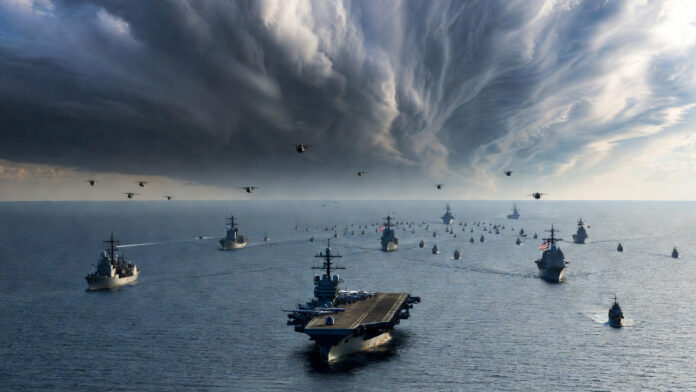
US defense sources and satellite imagery cited by media reports indicate the largest American military concentration in the Middle East since the 2003 Iraq war.
Naval Forces
Nuclear-powered carriers including USS Abraham Lincoln and USS Gerald R. Ford deployed or en route
Around 13 destroyers equipped with advanced radar and missile defense systems
Air Power
Stealth fighters: F-22 and F-35
Additional squadrons: F-15 and F-16
Support aircraft: AWACS surveillance, aerial refueling tankers, battlefield communication planes
Drones & Bombers
MQ-9 Reaper drones positioned at bases in Jordan
B-2 stealth bombers on high alert at Diego Garcia base in the Indian Ocean
Missile Defense
Patriot and THAAD systems deployed to protect US bases from missile strikes.
📍 Where US Forces Are Positioned
American military assets are spread across strategic locations near Iran, including bases and facilities in:
Saudi Arabia
Oman
Qatar
Bahrain
Roughly 30,000–40,000 US troops are currently stationed across the broader region.
🛡️ Iran’s Counter-Moves
Tehran has stepped up readiness and warned of severe retaliation if attacked.
Armed forces placed on full alert
Live-fire naval drills near Hormuz
Missile and drone forces reportedly positioned in underground facilities
Strategy focused on asymmetric warfare, including swarming tactics using fast boats and explosive drones
Iran has also signaled it could mine the Strait of Hormuz — a move that could disrupt roughly 20–25% of global oil trade.
🔥 Risk of Regional War
Iran’s Supreme Leader Ali Khamenei has warned that any US strike could trigger a wider regional conflict. Iran has threatened to target infrastructure in countries it believes assist Washington.
The Iran-aligned group Hezbollah has also stated that an attack on Iran could ignite conflict across the Middle East.
🤝 Diplomacy Still Underway
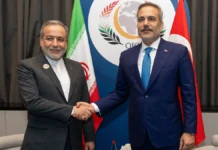
Despite military posturing, negotiations continue in Geneva and Oman. Talks involve Iranian officials and US representatives including Steve Witkoff and Jared Kushner.
Analysts say diplomacy may delay escalation — but both sides appear to be preparing for worst-case scenarios.
🌐 Potential Global Impact
Energy Markets:
A closure or disruption of Hormuz could send oil prices soaring and disrupt global trade.
Geopolitics:
Allies could be drawn into the conflict, increasing the risk of a multinational confrontation.
Humanitarian Risk:
A major war could destabilize Iran internally, potentially triggering civil unrest or refugee flows from its population of over 90 million.