JERUSALEM, Israel — February 26, 2026
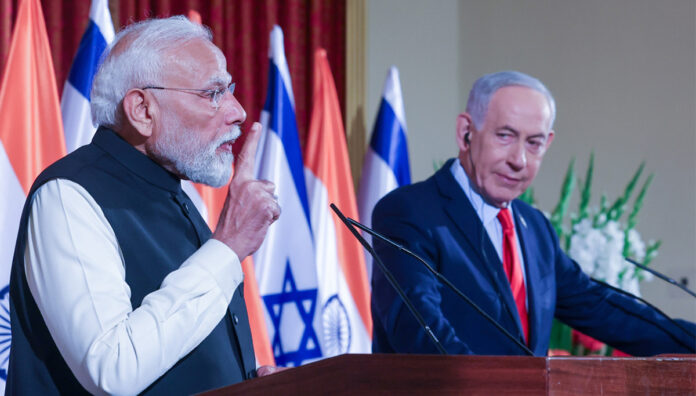
Prime Minister Narendra Modi and Israeli Prime Minister Benjamin Netanyahu held wide-ranging bilateral talks on Thursday, upgrading India–Israel relations to a Special Strategic Partnership and signing multiple agreements across defense, trade, technology, agriculture, and innovation.
The meeting marked the second day of PM Modi’s official visit to Israel, where both leaders emphasized deeper cooperation in critical and emerging technologies, civil nuclear energy, space, cybersecurity, and digital payments.
Special Strategic Partnership Announced
Addressing a joint press conference, PM Modi said the decision to elevate ties reflects “the aspirations and growing trust between our two nations.” He began his remarks with “Namaskar” and “Shalom,” underscoring the long-standing friendship between the countries.
PM Modi also noted that he was honored with the Speaker of the Knesset Medal during the visit, dedicating the recognition to the people of India and the India–Israel partnership.
Focus on Defense, Technology, and Trade
The two leaders agreed to further strengthen defense and strategic cooperation. They also accelerated discussions on a mutually beneficial Free Trade Agreement (FTA), signaling intent to finalize negotiations in the near future.
Key developments included:
Establishment of a Critical and Emerging Technologies Partnership
Expansion of cooperation in civil nuclear energy and space
Commitment to enhance cybersecurity collaboration, including plans for a Cyber Center of Excellence
Agreement to promote artificial intelligence (AI) in education and innovation sectors
Decision to create an India–Israel Innovation Center for Agriculture
Enhanced cooperation in fisheries and aquaculture
Collaboration in geophysical exploration and energy resource development
Cultural exchange agreements and commercial implementation protocols in trade and services
UPI Integration with Israel’s Payment System
A notable agreement was signed between India’s National Payments Corporation of India (NPCI) and Israel’s Masav to enable interoperability of India’s Unified Payments Interface (UPI) in Israel. The move aims to expand digital payment connectivity and facilitate smoother financial transactions between businesses and travelers.
IMEC and I2U2 Cooperation
Both sides reaffirmed their commitment to advancing the India–Middle East–Europe Economic Corridor (IMEC), seen as a major connectivity initiative linking India with Europe through the Middle East.
They also emphasized deeper coordination under the I2U2 Group — comprising India, Israel, the United Arab Emirates, and the United States — to drive joint projects in infrastructure, food security, clean energy, and technology.
Agriculture and Rural Development
Leaders highlighted efforts to modernize agriculture using advanced technologies and expand the “Villages of Excellence” model. The goal is to promote sustainable farming practices and innovation-driven rural development.
Financial and Institutional Cooperation
Additional agreements were signed between India’s International Financial Services Centres Authority (IFSCA) and the Israel Securities Authority to deepen financial collaboration.
The fourth India–Israel CEO Forum report was also presented during the visit, reinforcing private-sector engagement in trade, manufacturing, and services.
Regional Context
The talks also included discussions on the current situation in West Asia, with both leaders reaffirming their commitment to regional stability and cooperation.
PM Modi’s visit underscores India’s expanding diplomatic engagement in the region and reflects Israel’s strategic importance in India’s defense, technology, and innovation landscape.